
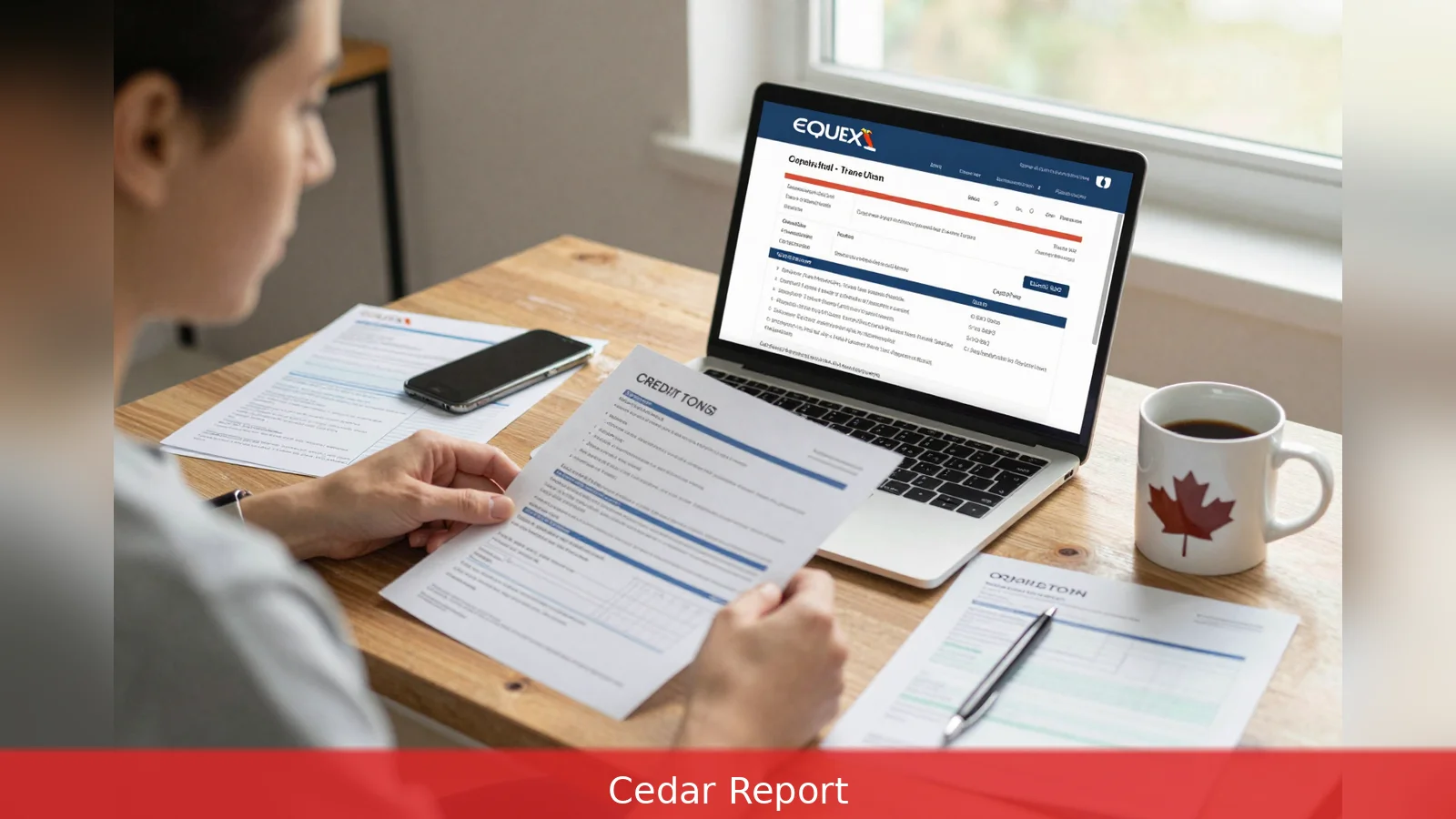
Order and correct your Equifax and TransUnion credit reports first. That single step moves the approval needle more than chasing the best advertised rate. Lenders run the same checks, identity, payment history, debt load and verifiable income, and completing those checks in the right order makes automated approvals likelier and shortens manual review. Exact score and DTI cutoffs vary by lender, but fixing bureau errors, lowering revolving balances and documenting steady income are the sequence that consistently raises approval odds. Start with the bureaus; a tidy file often turns a decline into a pre-qualification or an approval.
How do lenders actually decide who gets a personal loan, and why does a simple checklist change the result when no approval is promised? The short answer is that underwriting boils down to the same set of checks, and meeting those checks in a specific sequence both improves automated decisions and shortens manual review.
1. Pull and correct your credit reports first
First, order your files from both Equifax and TransUnion and review them for identity mismatches, duplicate accounts, accounts listed incorrectly as late, or collections entries that don't belong to you. Consumer guidance is unanimous that bureau errors are a practical, fixable cause of declines. Disputes with the bureaus or creditors sometimes require supporting documentation and can change the credit score an automated system reads, so complete corrections before you apply.
LoanScan and other lender-facing explainers stress that a corrected file can flip an instant decline to a pre-qualification or an approval with a reasonable rate. Treat this step as mandatory: a tidy file reduces friction and the chance a lender will demand manual verification that slows or kills an application.
2. Calculate your debt-to-income ratio and set a target
Second, add all minimum monthly debt payments and divide that total by your gross monthly income to produce your debt-to-income ratio, or DTI. Published guides disagree on exact cutoffs, so pick a target matched to the lender type you plan to approach: stricter banks generally expect lower DTIs, online lenders accept more flexibility, and some specialty programs will allow higher DTIs at a cost.
Different sources frame this as a range rather than a single rule. Use that map to pick your target based on whether you will apply to a bank, a credit union, an online platform or a private lender.
3. Reduce revolving balances and bring down credit utilization
Third, lower revolving balances so your credit utilization drops to a lower, healthier level. Consumer advice points to utilisation as the fastest lever to improve the score a lender will see.
Paying down cards or shifting balances to a plan that reduces the current statement balance will usually raise your score more quickly than opening new accounts or applying for credit.
Practically, this means prioritizing repayment of high-balance revolving accounts and avoiding new card charges while you are preparing an application. A lower utilisation rate is both a direct score improvement and a visible signal to underwriters that you manage revolving credit responsibly.
4. Stabilize and document your income
Fourth, gather the documents lenders ask for: recent pay stubs, T4s, bank statements and tax returns where relevant. If you are paid by pension, employment insurance, gig work or self-employment, average income over several months and supply business bank statements and tax filings. FatCat Loans emphasises that lenders will accept non-traditional income if it's steady and verifiable.
LoanScan also flags that many lenders prefer applicants who have been at their current job for a short period of stability. If your employment is new, explain the continuity with offer letters or contract renewals and present recent consistent deposits in your bank statements to reduce friction.
5. Pick the right lender and loan structure
Fifth, choose the lender type that matches your profile. Banks are typically the strictest underwriters but offer the lowest rates to borrowers who meet the tightest score and affordability thresholds. Credit unions, online platforms and private lenders accept more risk but will often charge higher APRs. LoanScan explicitly positions banks as the strictest option, while alternative lenders trade stricter criteria for flexibility at a cost.
Also consider loan structure. A secured loan or offering collateral relaxes acceptance thresholds because it reduces lender risk. Adding a creditworthy cosigner can have the same effect. Both options shift legal and financial exposure to the pledged asset or cosigner, so treat them as tradeoffs rather than free solutions.

6. Use pre-qualification and soft-check rate shopping
Sixth, use pre-qualification tools and aggregator networks that perform soft credit checks to compare offers. LoanScan recommends The approach because soft checks let you see conditional pricing without the hard inquiries that can lower your score. Forbes Advisor also warns against promises of guaranteed approval from sketchy providers and advises borrowers to stick with reputable lenders for pre-qualification.
Pre-qualification is conditional pricing, not a final approval. Treat the result as a menu of likely outcomes and use it to narrow your single best-fit lender, rather than as a green light to fire off multiple full applications.
7. Strengthen marginal files with a cosigner, collateral or a secured product
Seventh, if your record is marginal, a cosigner or collateral can materially raise approval odds. FatCat Loans and LoanScan both cite this tradeoff: collateral and cosigners relax acceptance thresholds but transfer risk elsewhere. A secured personal loan will typically carry lower interest than an unsecured product aimed at the same applicant profile, but the asset you pledge is at stake on default.
Consider whether a short-term credit-builder product or a small secured loan to prove timely payments is a less risky way to improve your file before taking on a larger unsecured obligation.
8. Time applications to minimise hard inquiries
Eighth, avoid multiple hard credit pulls in a short window. Pre-qualify broadly with soft checks, then apply to the single lender that best matches your score, DTI and documentation readiness. LoanScan and Forbes Advisor both emphasise that unnecessary hard pulls should be avoided because they can shave points from your score and compound a marginal profile into a decline.
In practice this means collecting your documentation and completing the bureau corrections in advance, then allowing only a few carefully timed hard applications rather than several scattershot submissions.
9. Prepare the final application package
Ninth, assemble a complete file before you click apply.
Typical requirements include government-issued ID, proof of address, Social Insurance Number if requested, bank account details for repayments, and the income verification documents described earlier. LoanScan and consumer guides point out that incomplete or inconsistent applications trigger manual reviews and delays that increase the chance of decline.
Make sure the names, dates and figures on pay stubs, tax forms and bank statements match. If a lender asks for additional documentation, respond promptly. A tidy, consistent file reduces the friction that turns conditional pre-qualification into final approval.
Tactics for marginal applicants
If your profile is marginal there are practical remedies worth considering. First, use a credit-builder card or a small secured product to create recent on-time payment history. Second, consolidate high-interest balances to lower DTI and utilisation before applying for the larger personal loan you want. Third, demonstrate savings or reserves on bank statements, because having a buffer signals repayment capacity.
CanadianDebtRelief and other consumer guidance recommend these tactics specifically because they create verifiable improvements to the factors underwriters weight most heavily: payment history, utilisation and the appearance of reserves.
Lenders treat unsecured personal loans as higher risk than secured products, so they lean on credit history and income where collateral is absent. In effect, a higher score or a lower DTI substitutes for the safety a pledge would provide. LoanScan and FatCat Loans both point to this tradeoff: acceptance thresholds relax when collateral or a reliable cosigner is available, but cost and risk transfer away from the lender and to the borrower or the cosigner.
That means your best route depends on which levers you can move fastest. If you can lower revolving utilisation quickly, do that. If you can document steady non-traditional income convincingly, prepare the supporting bank statements and tax filings. And if neither is doable, a secured option or a cosigner may be the pragmatic interim solution.
Common application pitfalls to avoid
Avoid relying on offers that promise "guaranteed approval"; consumer guides warn these are often predatory. Don't mistake soft pre-qualification for final approval, and don't submit inconsistent documents across pay stubs, tax returns and bank statements. Those mismatches trigger manual review and delay, and missing documents are one of the simplest reasons applications fail.
Also avoid applying to many lenders with hard checks. Time your applications, correct bureau errors first, and then submit a single, complete application to the lender you have prequalified with and whose thresholds you meet.
Start now by ordering your Equifax and TransUnion credit reports, review them line by line, and begin disputes for anything incorrect. That sequence is the immediate next step consumer guides name for borrowers preparing to rate-shop or apply.
First, order and correct your Equifax and TransUnion files before you apply. Second, calculate DTI and pick a target range that matches your chosen lender type. Third, lower revolving balances to reduce utilisation, document steady income, pre-qualify with soft checks, and submit one complete application to the best-fit lender.
Related Articles
- Crypto fraud prevention: 8 steps after $94M in losses
- World Cup 2026 qualification: 48 teams, what Canada should watch
- 39% rule: How to qualify for a CMHC mortgage
Order copies of your Equifax and TransUnion credit reports, correct any errors, then calculate your exact DTI and credit utilisation before you start rate-shopping; that sequence is the single next action every guide in the field calls for.
This article was created with AI assistance.


