
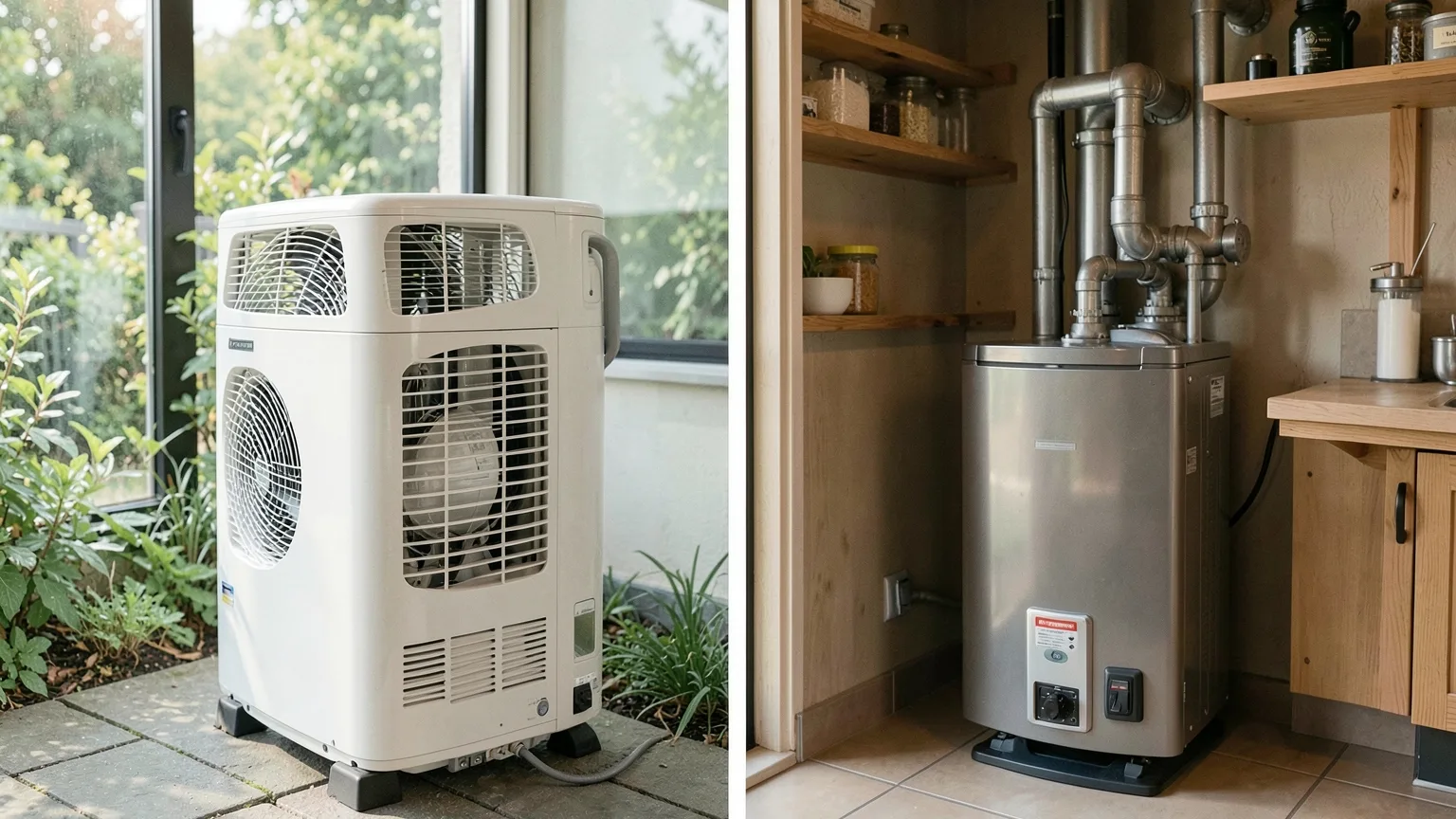
Heat pumps are the better choice for most Canadian households in 2026; gas boilers remain the practical pick only when very high-temperature heat or the lowest upfront cost is essential.
At the International Energy Agency's Global Conference on Energy Efficiency in Montreal, Environment Minister Julie Dabrusin and Energy Minister Tim Hodgson announced the launch of the Canada Greener Homes Affordability Program, saying it will expand support for heat pump installations to low- and medium-income households. For most Canadian homes in 2026, that policy tilt matches the economics: heat pumps generally cost less to run, provide both heating and cooling, and growing provincial programs are closing the upfront-cost gap. Gas boilers still win in one clear case. When homes need very high-temperature water fast or the cheapest purchase and install cost, a modern condensing gas boiler, at roughly 85 to 90 percent efficiency, remains the practical choice. Watch provincial rollouts and electricity prices; those two variables will decide how quickly heat pumps displace boilers across the housing stock.
heat pump vs gas boiler at a glance
Heat pumps are the better choice for most Canadian households in 2026, delivering lower running costs and year-round cooling as standard. Gas boilers hold the practical advantage only in one clear case: when a home needs very high-temperature water delivered quickly or when minimizing upfront purchase and install cost is essential. A modern condensing gas boiler typically provides rapid high-temperature water, which explains that narrow win. Watch electricity prices and provincial program rollouts next.
What heat pump is
An air source heat pump extracts heat from outside air and upgrades it, using a compressor and refrigerant, to warm interior space or provide hot water. Modern units commonly deliver roughly three to four units of heat for each unit of electricity consumed.
Manufacturers now offer cold-climate and mini-split models certified for Canadian winters and designed for retrofit work, combining heating and cooling in one package. Examples on Canadian 2026 product lists include Senville’s AURA Series mini-split and other dual-zone options.
Adoption is growing among homeowners, landlords and renters aided by federal and provincial programs. Ottawa’s new program directs over C$500 million, C$300 million federal, to support tens of thousands of retrofits, and Quebec and Hydro-Québec committed nearly C$350 million to bring heat pumps to renters. Installer networks have expanded as demand rises.
What gas boiler is
A gas boiler burns natural gas to heat water that’s circulated through radiators or underfloor systems. It was developed as a centralised replacement for room-by-room heaters in homes tied to a gas network, and for decades it’s been the default system in countries with extensive gas infrastructure; in the UK roughly 85 percent of homes still rely on gas boilers. Boilers are designed to supply high-temperature water on demand and to fit existing hydronic layouts without major changes to pipework or emitters. Owners of older houses and many landlords keep them for that simplicity. Homeowners switching from boilers often pick mini-split heat pumps for retrofit installs.
heat pump vs gas boiler on what they can do
-
Peak high-temperature heat: gas boiler wins. Boilers supply hot water at higher temperatures on demand, so they restore radiator and towel-rail warmth faster and meet heavy domestic hot-water draws without a separate booster.
-
Low-ambient performance: split. Cold-climate heat pumps are engineered for deep winters and deliver usable heat at low outdoor temperatures, but their useful heat output declines as the air gets colder. Boilers keep producing the same high-temperature water regardless of outdoor conditions.
-
Cooling and year-round comfort: heat pump wins. Reversible systems and mini-splits provide space cooling as standard and offer fine-grained room control that many hydronic systems can’t match.

-
Response and feel: split. Heat pumps tend to run longer cycles and provide steadier, even warmth. Boilers drive faster temperature spikes, which some occupants prefer for rapid recovery.
-
Noise and intrusiveness: heat pump wins indoors. Modern indoor mini-split units can be very quiet, though outdoor compressors are audible; boilers are quiet inside but require a flue and combustion clearances.
-
Installation disruption and retrofit work: gas boiler often wins on minimal upfront upheaval, especially where existing radiators and pipework are intact. Heat pumps commonly need exterior equipment, line sets and, in some homes, emitter upgrades.
-
Service and running-cost sensitivity: heat pumps are generally cheaper to operate where electricity prices and policy support make them competitive, while boilers are less exposed to electricity-price swings and remain attractive where power costs are high.
Living with heat pump and gas boiler
After a month of living with either system the differences are practical, not existential. Users report a different feel from heat pumps but not a loss of comfort; that short adjustment is mostly about accepting steadier, longer run cycles rather than chasing quick temperature jumps. Boilers feel familiar to households already on hydronic systems and generally demand less change in daily habits.
Setup and first impressions vary. Modern mini-splits and cold-climate air-source units are aimed at retrofit work and are often quicker to get running than a full HVAC swap, and some indoor units are rated as quiet as about 36 dB. Boilers will usually run with existing radiators and so often avoid visible new equipment inside the home.
Reliability and support are improving for heat pumps as public programs expand. The federal program and provincial efforts, Quebec and Hydro-Québec’s near C$350 million commitment, for example, and the Canada Greener Homes Affordability Program, have cut upfront barriers and widened installer capacity. That matters in month one: easier access to trained installers shortens commissioning time and troubleshooting. For both systems, local service availability remains the practical constraint on how smooth the first weeks feel.
Price and value
Costs fall into clear bands and the value equation depends on which band a buyer is in. At the low end, ductless mini-splits are the least expensive heat-pump entry point because they require minimal home work and include indoor and outdoor units plus the line set and controls. Mid-range heat-pump installs (whole-house multi-zone or ducted air-source systems) add labour, emitter or duct work and commissioning, pushing the upfront price higher. High-end installs with extensive retrofits carry the largest initial bills and the greatest chance of emitter upgrades later.
Gas boilers sit below most heat-pump whole-house installs on upfront cost and typically include the boiler, flue and basic controls, so they win where cash is tight. Later costs differ: heat pumps can need emitter upgrades or backup heaters, while boilers expose households to gas-price swings and routine flue servicing. Households with access to the federal Canada Greener Homes Affordability Program can shift that upfront calculus in favour of heat pumps.
Who heat pump suits, and who gas boiler suits
Pick a heat pump if your priority is lower lifetime energy cost where markets already favour electrification, or if your building needs heating plus active cooling from the same system. The International Energy Agency’s 2025 analysis found heat pumps had lower lifetime costs than gas boilers in 17 countries and identified heat pumps as the most cost-effective option for low-temperature heat below 150 C, a signal that owners focused on long-run operating bills and emissions should favour electrified heat.
Pick a gas boiler if you must deliver very high-temperature water quickly, or if your immediate constraint’s the smallest possible purchase and install bill. Boilers remain the pragmatic choice for owners tied to existing hydronic systems who can’t or won’t upgrade radiators or piping, and for buildings where high electricity prices or process heat needs make electric solutions impractical.
Practical boundary: for institutional buyers, manufacturers and retrofit teams, the decision maps to two questions, which temperature range you must hit, and which cash flow constraint is harder to change: upfront capital or ongoing bills.
The verdict
For most Canadian households in 2026, a heat pump should be the default choice. Gas boilers keep the edge only where a home must deliver very high-temperature water quickly or where the absolute lowest upfront purchase and install cost is essential.
That judgment rests on lower operating costs, built-in cooling and growing federal and provincial programs that cut upfront barriers to installation.
Watch the rollout of the Canada Greener Homes Affordability Program and its more than C$500 million in funding. How quickly provinces, landlords and tenants tap that money will determine how fast boilers give way to heat pumps across Canada.
Originally reported by CBC News.


