
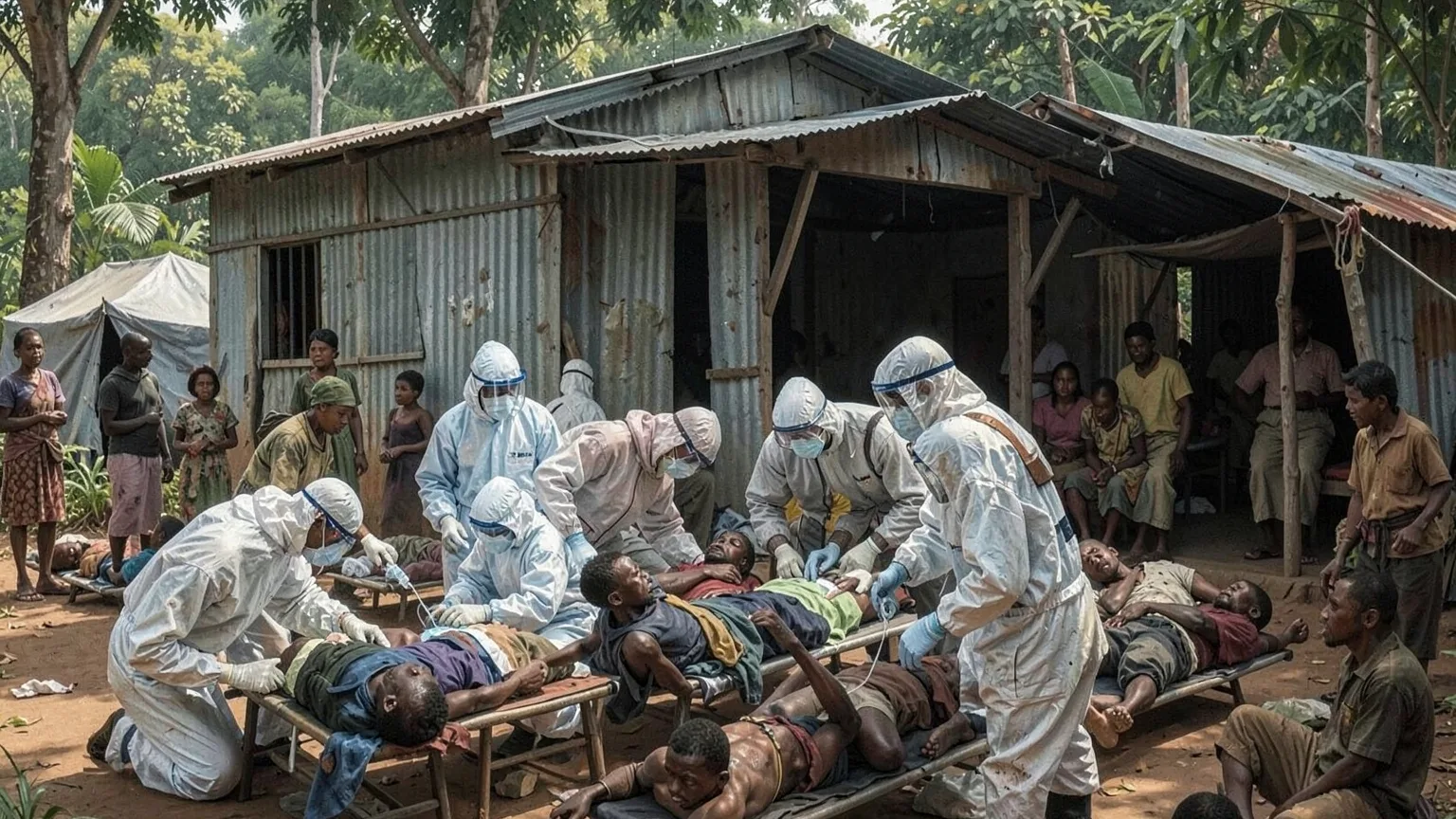
A record-fast Ebola epidemic in the DRC has reached about 6,100 confirmed cases and 2,950 deaths, straining response capacity while political tensions over a proposed constitutional referendum complicate humanitarian access and public trust.
In Ituri province, Tom Fletcher, the UN Emergency Relief Coordinator, warned frontline teams are being outpaced as infections mount. By Monday, health authorities had reported about 6,100 confirmed Ebola cases and 2,950 deaths, with more than 5,000 cases concentrated in Ituri, making this the fastest-growing Ebola outbreak on record.
The epidemic is driven by the Bundibugyo strain, which has no licensed vaccine or specific treatment. It likely began in high-mobility mining areas before spreading through interconnected communities. Meanwhile, the new opposition coalition C64 postponed planned nationwide protests after an African Union mediation offer from AU chair Evariste Ndayishimiye. The coalition accused President Felix Tshisekedi of using a draft constitution to reset term limits and seek another mandate. The UN has flagged a US$1.1 billion funding gap but has released over US$57 million from the Central Emergency Response Fund to support response and preparedness in the DRC and neighbouring countries. The coming days will test whether authorities can scale up fast enough to stop the virus and keep aid flowing.
What Happened
The Ebola epidemic in the Democratic Republic of Congo is accelerating, with health authorities reporting about 6,100 confirmed cases and 2,950 deaths by Monday. More than 5,000 cases are concentrated in Ituri province, making this the fastest-growing Ebola outbreak on record, spreading faster than response teams can trace and treat.
The outbreak is being driven by the Bundibugyo strain, for which there is currently no licensed vaccine or approved specific treatment. It likely began in the high-mobility mining area of Mongbwalu in late April and then spread through interconnected communities and health networks to Rwampara, Bunia and across the border into Uganda.
The UN Emergency Relief Coordinator, Tom Fletcher, warned the virus is moving faster than the response and highlighted the existing funding gap; the UN has released over US$57 million from the Central Emergency Response Fund to support response and preparedness in the DRC and neighbouring countries.
Political tensions have complicated access to affected areas. The newly formed opposition coalition C64 postponed planned nationwide protests after African Union chair Evariste Ndayishimiye offered mediation. The coalition accuses President Felix Tshisekedi of using a draft constitution to reset term limits and seek another mandate. Tshisekedi has referred the referendum bill to the constitutional court, while the opposition accepted the AU chair’s mediation pending talks.
Authorities and international bodies have recommended tightening public-health measures and adjusting mass gatherings to limit spread. The immediate test will be whether new funding and calmer political access come quickly enough to slow transmission.
The Context
The epidemic is outrunning the systems meant to contain it: authorities have reported about 6,100 confirmed Ebola cases and 2,950 deaths in the Democratic Republic of Congo, with more than 5,000 cases concentrated in Ituri province, a pace that marks the fastest-growing Ebola outbreak on record.
The surge is driven by the Bundibugyo strain, which currently has no licensed vaccine or specific treatment. Public health experts trace the first infections to high-mobility mining areas in Ituri, notably Mongbwalu, in late April. The virus then spread through interconnected communities, health networks, and into neighbouring Uganda.

The UN Emergency Relief Coordinator warned the virus is moving faster than the response and highlighted the existing funding gap, even as the UN released more funds from the Central Emergency Response Fund to support response and preparedness in the DRC and neighbouring countries. That shortfall limits how quickly treatment centres, surveillance teams, and trials can scale.
Political tensions have amplified the challenge. The newly formed C64 opposition coalition postponed planned nationwide protests on July 8 after African Union chair Evariste Ndayishimiye offered mediation, accusing President Felix Tshisekedi of using a draft constitution to reset term limits and seek another mandate, and Tshisekedi has referred the referendum bill to the constitutional court pending review. The opposition accepted the AU chair’s mediation, at least for now, while talks are arranged.
Reaction
Political tensions over a proposed referendum have collided with an overstretched health response, shrinking space for outreach and making communities less likely to cooperate with containment efforts.
The newly formed C64 opposition coalition postponed planned nationwide protests after Burundian President Evariste Ndayishimiye, as African Union chair, offered to mediate. The coalition, formed in May and including figures such as Martin Fayulu and Moise Katumbi, had accused President Felix Tshisekedi of seeking to reset term limits.
UN Emergency Relief Coordinator Tom Fletcher warned the virus is moving faster than the response, saying, "The response is growing and has been scaled up, but the virus is moving faster." He also flagged the existing funding gap while the UN released more funds from the Central Emergency Response Fund to support response and preparedness as local authorities report over 6,000 confirmed cases.
Health authorities and international bodies have recommended limits on gatherings and other public-health measures, and officials have adjusted plans for events and community outreach to try to slow spread and reduce large, uncontrolled exposures. At the same time, President Tshisekedi referred the referendum bill to the constitutional court, and AU chair Ndayishimiye’s mediation offer was accepted by the opposition pending talks.
The opposition’s postponement of protests leaves those AU-mediated talks as the immediate political hinge for whether tensions ease or flare again.
What's Next
The near term will be decided by two linked races: whether donors and agencies can scale up the humanitarian response quickly enough, and whether political tensions over the referendum stop communities from cooperating with health teams. UN Emergency Relief Coordinator Tom Fletcher warned that "the virus is moving faster" than the response and highlighted the funding gap that must be closed for the effort to expand. The UN has already released more funds from the Central Emergency Response Fund to support response and preparedness, but officials say far more is needed.
Concrete markers to watch
- Funding, logistics and surge capacity. The UN put the funding shortfall at $1.1 billion and has made an initial CERF release of over $57 million to buy time for response and preparedness. Those allocations will determine whether surveillance, laboratory capacity and treatment centres can be expanded.
- Case counts and geography. Local authorities have reported about 6,100 confirmed cases and 2,950 deaths, with more than 5,000 cases concentrated in Ituri province. If transmission continues at current speed in that high-mobility region, response teams will face growing caseloads beyond existing treatment capacity.
- Medical countermeasures. The outbreak is driven by the Bundibugyo strain, for which there is no licensed vaccine or specific treatment. That constrains the tools available to slow transmission.
- Public-health measures and community cooperation. International health bodies have recommended adjustments to gatherings and stepped-up infection prevention measures, while contact tracing is already missing many new infections. Whether communities accept and follow those measures will shape case trajectories.
- Political stability and humanitarian access. The opposition coalition C64 has postponed nationwide protests after an African Union mediation offer by AU chair Evariste Ndayishimiye, and President Felix Tshisekedi has referred the draft referendum bill to the constitutional court. If talks hold and large-scale unrest is avoided, access for health teams will be easier. If protests resume and clashes recur, past violence suggests trust and access could deteriorate quickly.
Donor decisions and political choices are the levers that will change the course of this epidemic. If the funding gap is not filled and the response does not scale faster than transmission, the UN warns more lives will be lost and the outbreak will grow. If political tensions reignite and undermine community trust, contact tracing and care-seeking could falter, eroding the limited gains responders have made and making containment far harder.
Originally reported by UN News.
This article was created with AI assistance.


