
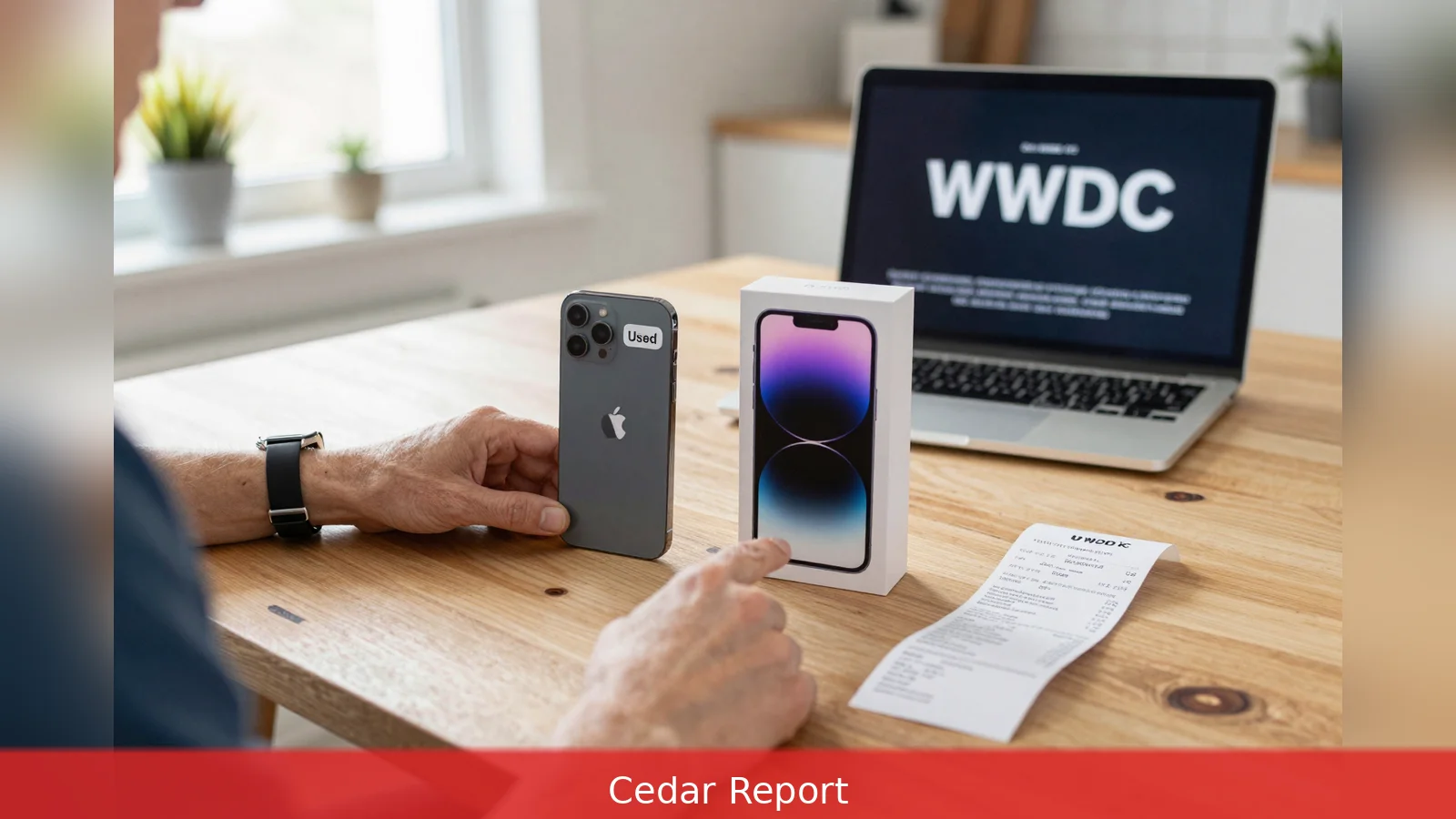
Longer usable life for older iPhones is already changing the cost calculation for buyers, because Apple has rebuilt iOS scheduling in the upcoming iOS 27 to ease performance strain on older chips. The change, announced at Apple’s WWDC keynote in early June, is designed to allocate processor time better between foreground and background tasks, and Wired reports it should let models such as the iPhone 11 "keep humming" for more years. Wired also cited an interview with outgoing Apple CEO Tim Cook in The Wall Street Journal in which Cook warned price increases for Apple products would soon be "unavoidable," a headwind the company is preparing for. Apple plans to ship iOS 27 this fall, and that timing is central to whether buying used becomes the smarter financial move for many consumers.
The immediate result is practical: older iPhones should feel faster for longer once iOS 27 arrives, because the software will smooth out short bursts of slowdown that show up on ageing chips. Apple framed the work at WWDC as a change to the operating system's CPU scheduler, a low-level part of the software that decides which tasks run when, and how much processor time each gets. That scheduling tweak was the core feature Apple highlighted for extending usable performance on older hardware.
What Apple changed in iOS 27
At WWDC, Apple described improvements that let iOS manage foreground and background work more efficiently, reducing the kinds of micro-lags users notice when an older phone juggles tasks. Wired reported the company showed how the new scheduler avoids short performance drops on older chips and said those improvements should be meaningful on models back to the iPhone 11. Wired quoted Kyle Wiens, the CEO of repair advocate iFixit, saying, "Buying used has never made more sense." The company didn't publish a benchmark number tied to the scheduler work in the Wired piece, but the technical explanation Apple offered was clear: better internal task management, rather than faster silicon, will narrow the practical gap between new and older phones.
That is an important distinction. Software fixes don't turn an older phone into a new one, but they change the user experience where it matters most: responsiveness during everyday apps, web browsing, and switching between tasks. For many buyers, a phone that ‘‘keeps humming’’ is functionally equivalent to a newer model that delivers small camera or battery improvements but costs several hundred dollars more at retail.
Why the economics now favour used phones
The other half of the case for used devices is price. Wired tied Apple’s software push to broader supply and cost pressures. In an interview with The Wall Street Journal cited by Wired, Tim Cook warned price increases would soon be "unavoidable." Wired said the company sees a global shortage of memory and storage components, a tightness the industry attributes to demand from hardware that supports large AI data centres. The article also listed trade frictions and regional instability as ongoing disruptions to logistics and component flows, and said Apple has been preparing for higher input costs.

Those pressures matter because Apple has so far absorbed much of the cost rise internally. Jitesh Ubrani, research manager at IDC, told Wired that Apple had mostly eaten higher component costs to date, which implies the company’s margins have been squeezed and that consumer prices may reflect that shift going forward.
In short, buyers face the prospect of pricier new phones at the same moment the software on older models is improving.
Wired made the arithmetic tangible by comparing upkeep costs. The article noted Apple charges $119 to replace the battery in an iPhone 17, and that replacing an iPhone 13 battery runs about $30 less. Wired framed that difference as an example of how maintaining or refurbishing a one- or two-year-old handset can be materially cheaper than buying new. Kyle Wiens told Wired that purchasing a year-old model and replacing the battery periodically can deliver substantial savings compared with stepping up to the newest device.
Those savings aren't theoretical. They're everyday numbers consumers can weigh against the value of small, incremental improvements in camera quality, battery life, or features that ship only on the newest models. For buyers who prioritise functional performance and value, the combination of longer usable life and higher new-device prices changes the decision calculus.
Wired also noted it reached out to Apple for this reporting and that Apple didn't respond to a request for comment. The absence of a company response doesn't change the technical point Apple presented at WWDC, but it leaves open how Apple will talk about tradeoffs between encouraging upgrades and supporting older hardware.
There are tradeoffs. A used phone usually misses some of the headline features Apple reserves for its latest models, and marginal gains in camera and battery can matter to some purchasers. But the central argument Wired builds is straightforward: software that stretches performance narrows the practical gap with new hardware, and rising retail prices for new phones make the total cost of ownership for used phones more attractive.
For buyers in Canada and elsewhere, that means more choices. Some will continue to buy new when they want the newest features and the maximum lifespan before an eventual trade-in. Others will opt for a refurbished or lightly used model, buy a battery replacement when needed, and save on upfront cost without sacrificing day-to-day usability.
Related Articles
- iOS 27 boosts older iPhone speed, up to 80% faster
- WWDC 2026: Six OS updates, Siri rebuilt
- One app fixes Google TV: AT4K strips promo clutter
Apple's planned iOS 27 rollout this fall will be the immediate test of whether scheduling changes alone can keep older iPhones competitive. For Canadians deciding between a refurbished handset and a new model, the update could well tip the balance. Wired originally reported the technical details.
This article was created with AI assistance.


