
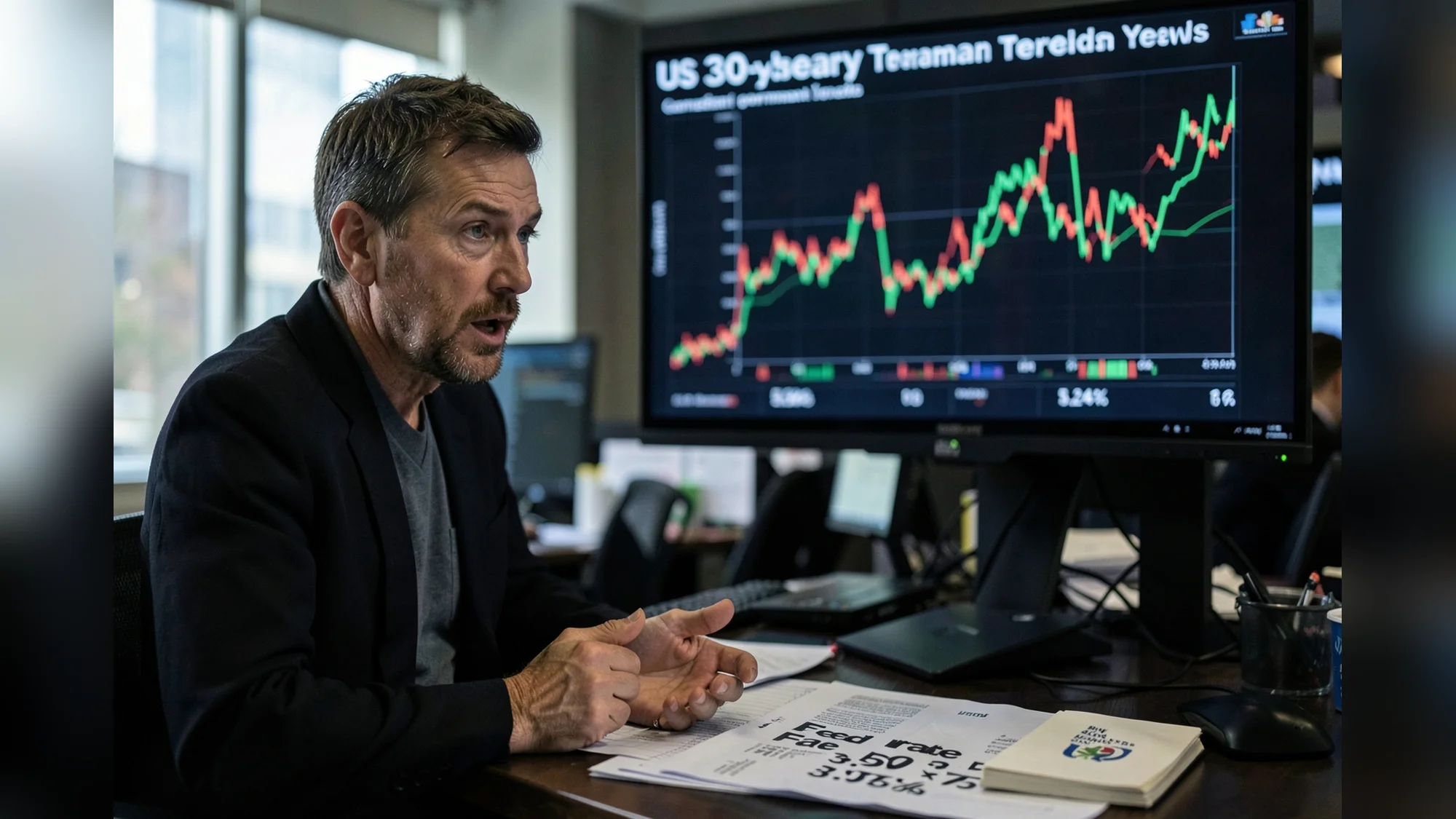
Markets treated the Federal Reserve's pause as a tightening, sending the 30-year Treasury to about 5.24%, a 19-year high, and pushing long-term yields sharply higher. The Fed left its policy rate at 3.50%-3.75% after its July 29 Federal Open Market Committee meeting, which split 9-3 and prompted the market repricing. Chair Kevin M. Warsh, elevated to the role earlier in 2026, framed the hold as a firm commitment to fight inflation while declining to give explicit operational guidance. That market-driven tightening matters for Canadian borrowers because U.S. long-term yields closely track Canadian yields.
3.50%-3.75% is now the immediate reference point for households and businesses because it sets the tone for borrowing costs across the yield curve. Consumers still face high short-term borrowing costs, with average credit card rates near 20% and mortgage rates at levels not seen since last August. The combination squeezes household budgets and slows mortgage refinancing activity.
The Fed voted 9-3 to hold, with Beth M. Hammack of the Cleveland Fed, Neel Kashkari of the Minneapolis Fed and Lorie K. Logan of the Dallas Fed dissenting in favour of a 25 basis-point rise. Warsh told reporters the Fed has no tolerance for elevated inflation and that policymakers don't have a magic wand. He declined to give explicit operational guidance, signalling a preference for allowing markets to do some of the repricing.
Markets obliged. Long-term Treasury yields jumped, with the 30-year rising as much as 14 basis points to nearly 5.23% and reaching about 5.24% in subsequent trading, the highest for that tenor in 19 years. The 10-year climbed to about 4.70%, while two-year rates fell in some intra-day trading.
The result was one of the largest steepenings of the yield curve after a Fed meeting since at least the mid-1990s.

Analysts had already pushed 10-year yields higher in the weeks before the meeting, evidence traders had priced further tightening even without an immediate policy move. That pattern is the reason some fixed-income professionals call the episode a case of markets doing the Fed's tightening for it.
Ben Emons, managing director of fixed income at Highline Asset Management and founder of FedWatch Advisors, argued that being vocally hawkish while refraining from a policy move can let market forces tighten financial conditions. Emons warned that letting markets "judge for themselves and let markets tighten Fed policy" risks a credibility gap and could raise long-term inflation expectations and widen risk premia if investors conclude the Fed is behind the curve.
The distributional consequences are concrete. Higher long-term yields directly raise mortgage rates and corporate borrowing costs, increasing monthly payments for new mortgages and new corporate debt issuance while reducing the value of existing long-duration assets. Equity markets weakened after the spike in long-term yields, and measures of inflation expectations moved higher in the same window.
Canada is exposed. Analysts flagged that a sustained rise in U.S. long-term rates would translate into higher Canadian government and corporate borrowing costs because of the close correlation between the two markets and the cross-border transmission of government-bond moves. That connection could make the Bank of Canada's policy calculus as it weighs domestic conditions alongside U.S. signals.
The July 29 meeting highlighted two tensions shaping policy. Officials face stubborn inflation pressures tied to energy-market volatility, trade policy and elevated business investment in AI-related areas, all factors Fed officials say could keep inflation above the 2% target. At the same time, the Fed's choice to emphasise toughness while withholding mechanical guidance has made market repricing the channel through which tighter financial conditions are delivered, with potentially different economic effects than a conventional 25 basis-point rate action.
Related Articles
- Goldman up 1% as JPMorgan and BofA slide
- 30-year Treasury tops 5.18%, highest since 2008
- Markets priced higher-for-longer after Warsh signals
The immediate pricing outcome was clear: the 30-year Treasury reached about 5.24%, the highest level in 19 years. Originally reported by financialpost.com.
This article was created with AI assistance.


