
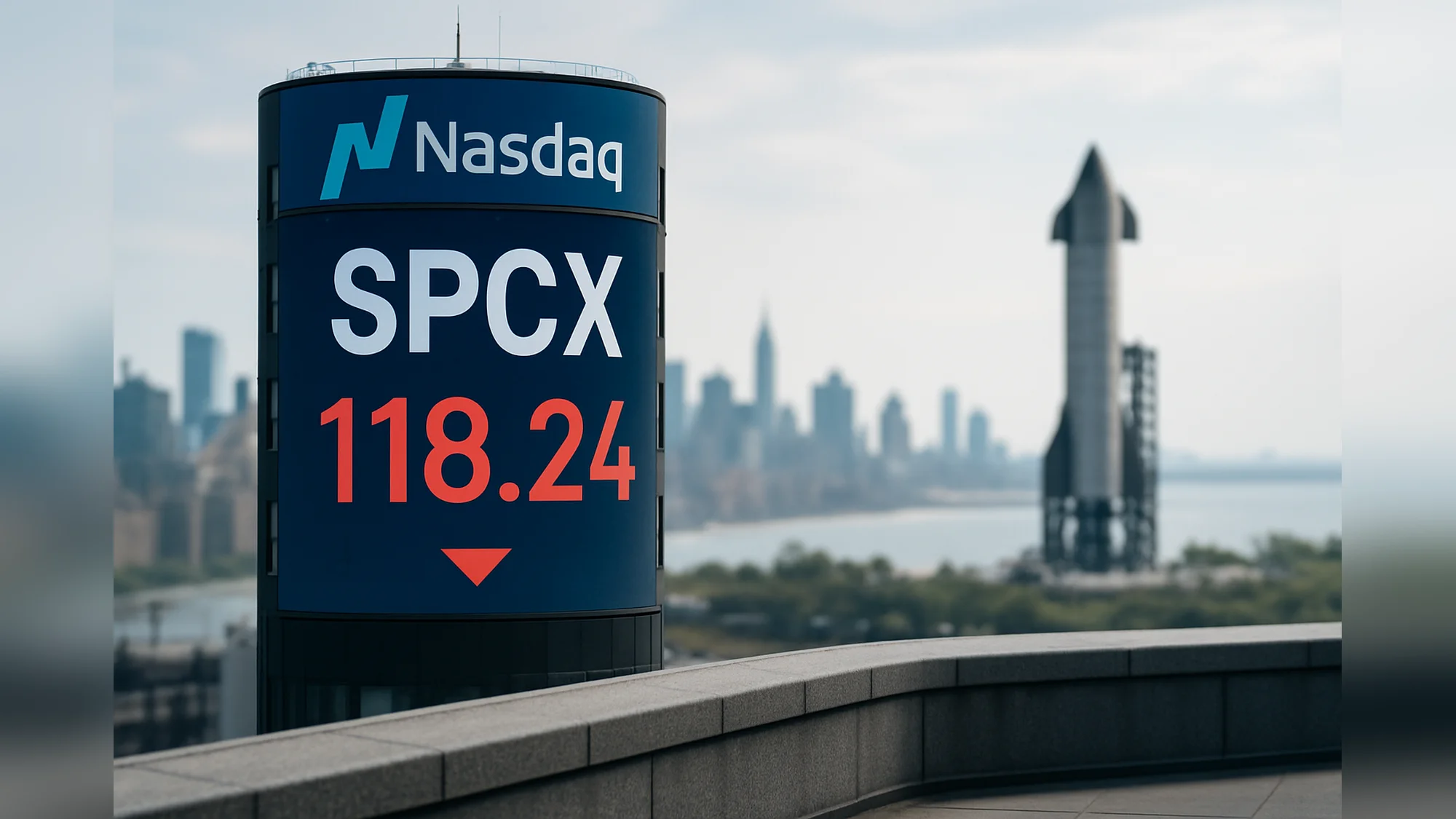
$75 billion is how much SpaceX raised in June 2026 in what analysts call the largest IPO on record. The company priced 555.6 million shares at $135 each and listed on Nasdaq under the ticker SPCX on 12 June 2026. A small group of advisers and institutional intermediaries received the meaningful allocations, and one retail client reported getting a full allotment through their adviser. Whether that proves a good bet depends on volatile aftermarket moves and SpaceX delivering on capital intensive projects tied to AI and satellite infrastructure demand.
$75 billion reshaped how advisers and intermediaries handled the SpaceX offering and how retail investors experienced the listing. The deal was priced at $135 per share on 12 June 2026, amounting to 555.6 million shares, and it completed that same day. Because the raise was so large, attention quickly focused not on whether the IPO happened but on who actually received shares and in what size.
Allocations for mega-IPOs are set by advisers and institutional intermediaries, and retail requests are often filled only partially. A MarketWatch Moneyist column that prompted a reader question used that reality as its starting point. The columnist, a CPA and tax adviser with more than 40 years of experience, described a full allocation arranged by an adviser as an uncommon privilege that doesn't guarantee a long-term win.
An analysis of post-IPO trading shows how quickly a full allocation can look either prescient or painful. SPCX opened with an early rally and briefly pushed SpaceX close to a $3 trillion market capitalisation, with intraday highs near $225.64.
By the close on 23 July 2026 the share price had fallen to $118.24, more than 12 percent below the IPO price and roughly 47 percent off its immediate post-IPO peak, and a 52-week low of $110.85 was already printed.

That pattern fits a familiar sequence around headline tech listings. Analysts describe an initial pop driven by strong demand and constrained float, a sharp correction as early sellers take profits, a lengthy accumulation phase while institutions quietly buy, and then a potential sustained uptrend if underlying demand and fundamentals reassert themselves. SpaceX's post-listing volatility looks like the early correction phase of that cycle.
Investor appetite for SpaceX tied directly to broader flows into AI and infrastructure. Morgan Stanley Research estimated roughly $3 trillion of AI related infrastructure investment flowing through the global economy by 2028, and PitchBook data cited in coverage showed AI funding surged in early 2026. Those demand drivers are central to why investors paid record attention to Starlink and related satellite plans as part of SpaceX's IPO story.
Operational progress continued even as the market sorted out valuation. SpaceX completed a Starship test flight on 24 July 2026 that deployed 20 new Starlink V3 satellites and recovered stages in splashdowns, a sign of progress on launch and satellite production. The company is also advancing Starship for deeper space missions and building more powerful Starlink satellites in Redmond, Washington, all projects that require heavy capital and successful execution to justify a large public valuation.
For the retail investor who landed a full allocation through an adviser the takeaway is pragmatic. The allotment is rare and reflects access most retail clients don't get, and the MarketWatch Moneyist columnist emphasised that rarity as well as the uncertainty. The immediate aftermarket has already been volatile, and the longer term case for that allocation depends on SpaceX executing costly programmes and on the pace of AI and satellite infrastructure demand over the coming years.
My read is simple: a full IPO allocation buys you access, not certainty. Short term prices will move with trading flows and publicity. Over the longer term the allocation will pay off only if SpaceX turns operational progress into sustained revenue growth large enough to absorb the capital it raised.
Related Articles
- SpaceX set to raise about $75 billion in IPO despite Starship setbacks
- Charter stock jumps 12% as SpaceX tie-up poses frenemy risk
- Musk forecasts $1T SpaceX revenue, far above Wall Street
SpaceX's shares closed at $118.24 on 23 July 2026, more than 12 percent below the IPO price, a concrete reminder that the $75 billion allocation is being judged by aftermarket trading as much as by access.
This article was created with AI assistance.


