
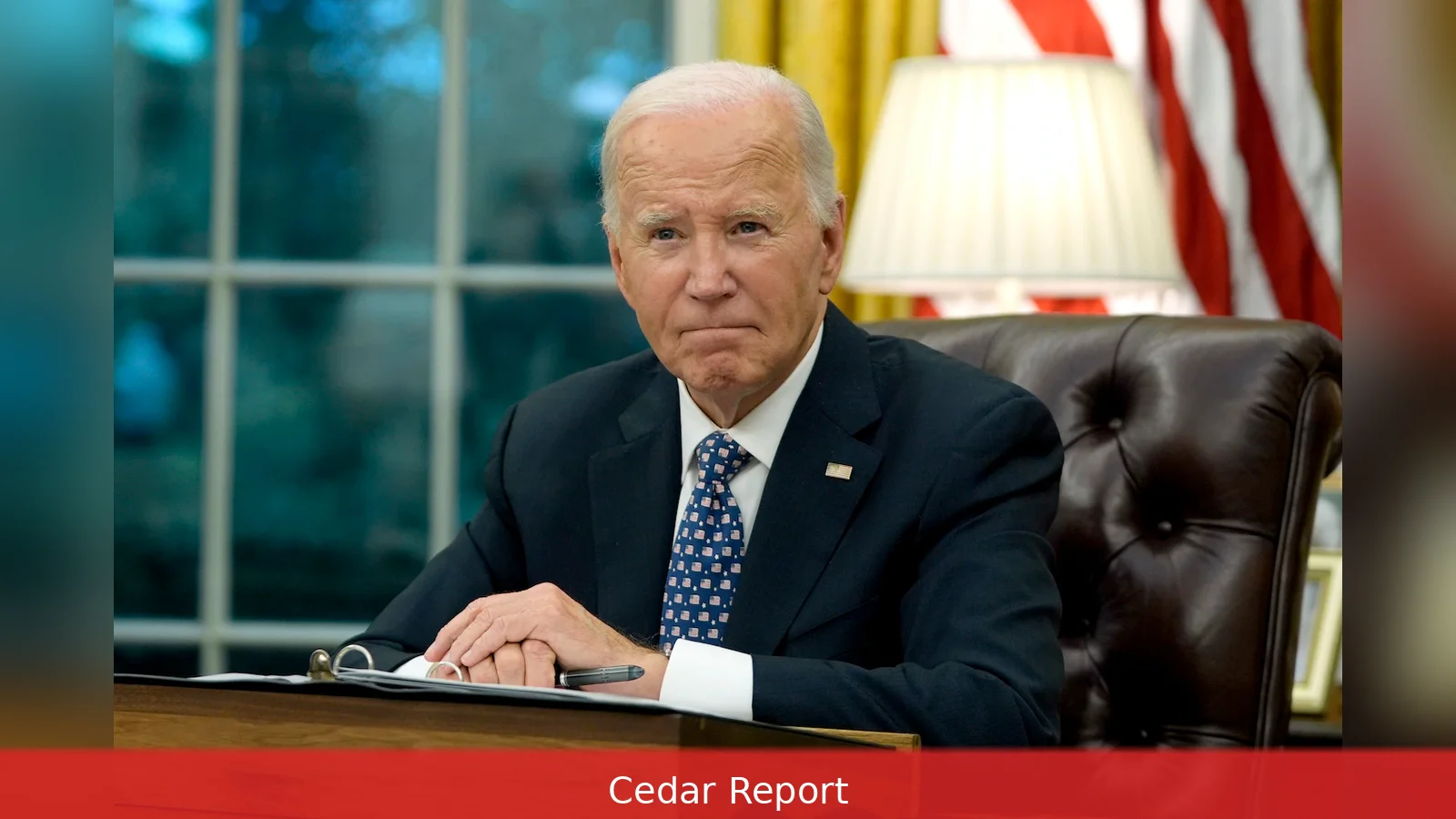
May 27, 2026. President Joe Biden filed a federal lawsuit in Washington, D.C., seeking to stop the Justice Department from turning over audio recordings and transcripts of private interviews he gave to his biographer in 2016 and 2017, CBC reported. The complaint asks a judge to permanently block disclosure to the U.S. House Judiciary Committee and to the Heritage Foundation, the conservative group that requested the material, and it says the department had told the Heritage Foundation in 2024 the records were exempt from release under the Freedom of Information Act, CBC reported. The Justice Department had scheduled a mid-June turnover, with June 15 cited as the planned date, and the litigation now centres on whether that transfer will go ahead.
If the Justice Department hands the files over on June 15, private conversations recorded at Biden's home would move from investigative records into public hands, available to lawmakers and to the Heritage Foundation.
You may be deciding whether to follow the dispute, or wondering what the planned release means for Biden's privacy and for public access to materials gathered in federal probes. The lawsuit filed May 27 frames that immediate choice. It was lodged in federal court in Washington, D.C., and asks the court to permanently prevent the Justice Department from releasing the interview recordings and transcripts to the House Judiciary Committee and to the Heritage Foundation, CBC reported.
The audio and transcripts were captured while Biden was working on his 2017 memoir, Promise Me, Dad: A Year of Hope, Hardship, and Purpose, and include interviews conducted by Mark Zwonitzer, who assisted Biden on his memoirs, CBC and other coverage reported. Washington Post reporting on May 27 noted that the files were obtained as part of a special counsel review of Biden's handling of classified documents.
That special counsel work is the legal backdrop to the dispute. Robert Hur, who was appointed in January 2023 to oversee the classified documents inquiry, concluded that Biden had retained classified materials from his time as vice-president but recommended no criminal charges, Reuters reported in February 2024. Materials gathered during Hur's inquiry, including the interviews with Biden's ghostwriter and later an interview with Hur himself, have become the focus of competing claims about privacy, executive privilege, congressional oversight, and public access.

The complaint stresses the circumstances of the recordings. Biden's lawyers say the conversations were private, recorded at his home during work on the memoir, and that public disclosure would be an unwarranted invasion of privacy, CBC reported. The complaint also argues that when the Justice Department obtained private conversations in the course of a criminal investigation, it had a particular responsibility to shield them from disclosure.
The legal fight and why it matters
Sure, the immediate legal question is narrow and time sensitive. The complaint asks the court to declare the House committee's request pretextual and invalid and to bar any release of the material, saying the department had previously told the Heritage Foundation in 2024 the records were exempt from disclosure under the Freedom of Information Act, CBC reported. That earlier position stands in contrast to the department's later communication to the House Judiciary Committee that it would produce the files.
Earlier this month Biden sought to intervene in a separate Heritage Foundation lawsuit against the Justice Department over the same materials. A judge allowed Biden to join that case last week but barred him from bringing claims specifically about the committee's request, court records show, CBC reported. The new complaint filed May 27 presses the point further by asking a federal judge to block the planned turnover before it happens.
The Justice Department had slated a mid-June turnover of the records, with June 15 specifically cited as the date it intended to hand the materials over to the House Judiciary Committee and the Heritage Foundation, CBC reported. That date is now a scheduled milestone in the litigation, and any court motion deadlines or hearings set before June 15 will determine whether the department can make the transfer on the planned date.
The dispute has already prompted political reaction. President Donald Trump posted a comment calling Biden "crooked" after news of the suit became public, Newsweek reported. Media coverage notes the political stakes for both parties because the materials were gathered during an inquiry that both criticised aspects of Biden's record and noted his retention of classified material while declining prosecution.
The Justice Department didn't immediately respond to requests for comment, CBC reported. The complaint seeks an injunction that would permanently block disclosure and a judicial declaration that the committee's request is invalid. Which side persuades the court before June 15 will decide whether the files reach the public under the department's planned timetable.
For anyone following the dispute, the practical next steps are concrete. Watch the court docket and the public calendar for filings or hearings tied to the turnover. The lawsuit filed May 27 is aimed directly at preventing the transfer the department scheduled, so any motions, briefs, or hearing dates that appear in the coming days will shape whether the recordings are released on that planned date.
Related Articles
- Quebec court orders journalist to pay $112,340 tax bill
- Caroline Mulroney to resign June 5, triggering by-elections
- May 30 will decide availability of several injured stars
June 15, 2026, is the next concrete milestone. A ruling or court action before that date will determine whether those private interviews move into public hands.
This article was created with AI assistance.


