
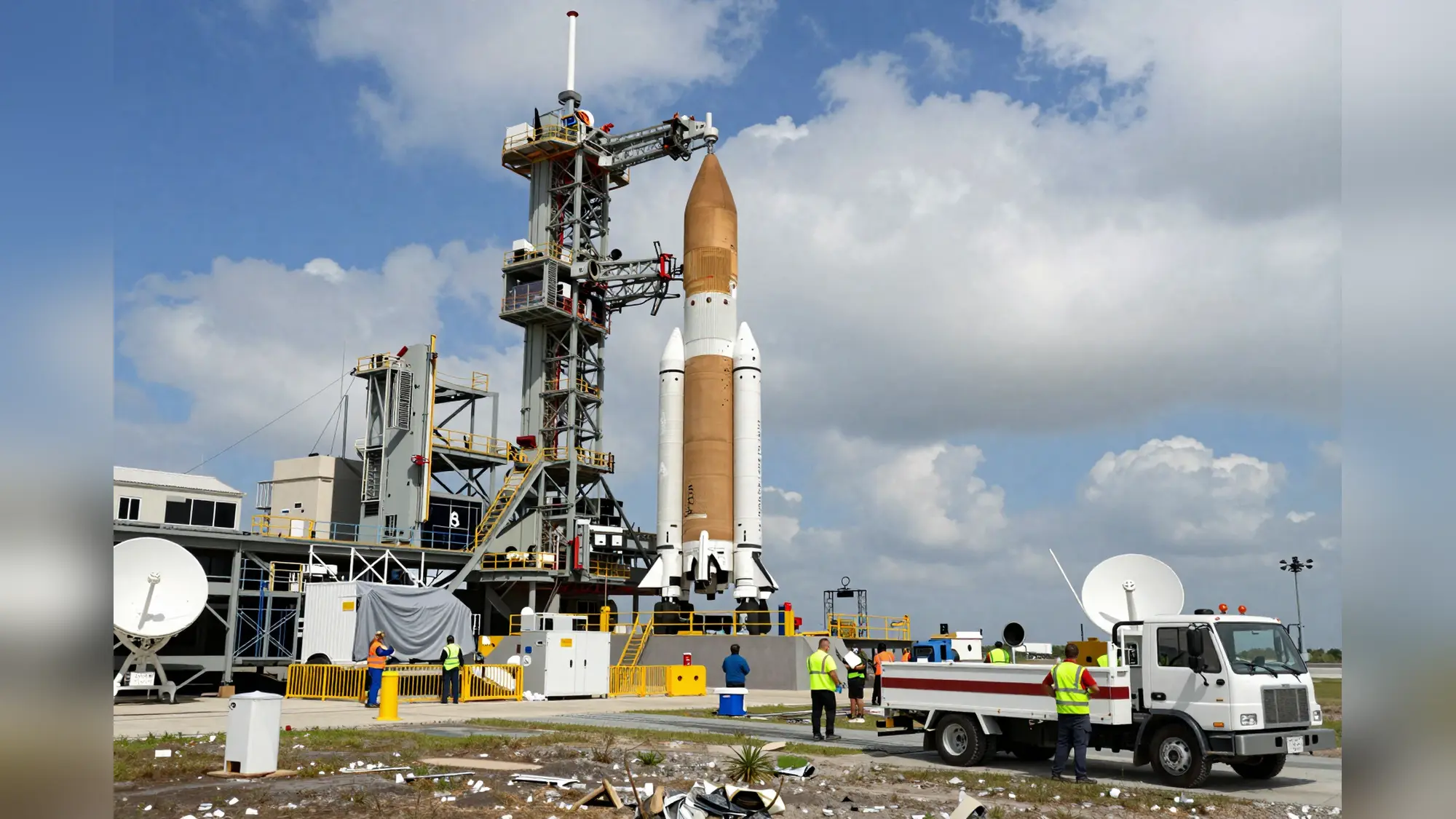
A roughly $10 billion capital infusion will let Blue Origin rebuild its Cape Canaveral launch pad and press ahead with plans to host data centres in orbit, after The New York Times reported the funding round is being led by Coatue with a large personal commitment from Jeff Bezos. The round is reported at a $130 billion pre-money valuation and would be the first time Blue Origin takes outside investors since its founding in September 2000. Coatue is said to be putting in about $4 billion, Bezos roughly $2 billion, and other institutional backers the remaining near $4 billion, according to the report published July 8. The financing is intended to speed repairs to the New Glenn program and to bankroll satellite and orbital data-centre ambitions.
The financing is aimed at immediate operational repair and longer term commercial pivots, and the cause is clear: Blue Origin needs cash after a May static-fire test explosion destroyed a New Glenn vehicle and left its Cape Canaveral pad out of service. The company hasn't yet determined the cause of that failure as of early July, and the pad that supports New Glenn is the only one capable of hosting the vehicle. Rebuilding or repairing that infrastructure is presented as a top priority for management.
According to The New York Times, the DealBook account relayed by TechCrunch frames the round at about $10 billion on a $130 billion pre-money valuation, with Coatue Asset Management leading the deal. Coatue is reported to be committing roughly $4 billion and Jeff Bezos about $2 billion, leaving around $4 billion to other large institutional investors. If confirmed, the transaction would mark Blue Origin's first external fundraise after the company had been largely financed by Bezos since its founding in September 2000.
Government customers are a material part of the picture. Blue Origin provides services to NASA and the U.S. Space Force, including work tied to the Artemis lunar program. The report frames the financing as a way to shore up the balance sheet that supports those government contracts while also sharing development risk with outside partners, all without dislodging Bezos from leadership or diluting his sizeable personal stake.
Commercial ambitions beyond launch are central to how the company describes its use of proceeds. The Times account says Blue Origin is pursuing plans to place significant computing capacity into orbit and to build a high-capacity satellite broadband network aimed at enterprise, government and data-centre clients.

If those projects advance, they would link aerospace services with the commercial cloud and connectivity markets and reshape how some customers think about data-centre geography and network resilience.
Market context for the reported round matters. The report places the fundraising after a major public-market event for a sector peer the prior month, which it credits with lifting investor appetite for privately held space firms. The timing suggests investors who saw value in that public debut are now willing to back private players with larger checks, and Blue Origin's reported terms reflect that shift.
Operationally, management still publicly signals an intent to return New Glenn to flight later in 2026. That target is conditional on resolving the May test failure and restoring the Cape Canaveral pad to flight status. The reported fundraising is presented as the capital package to support those recovery steps while funding the company's stated orbital infrastructure plans.
For NASA, the U.S. Space Force and commercial customers, the round would reduce a key source of programme risk tied to cash constraints and a single damaged pad.
For investors, the deal spreads financial exposure across new partners while keeping Bezos as a large owner and decision-maker. The DealBook and TechCrunch relay of The New York Times reporting sets July 8, 2026 as the date the fundraising details were publicly reported.
Related Articles
- AST SpaceMobile Shares Fall After Blue Origin Launch Error
- NASA Names 24 Hubble Fellows — What It Means for Research Budgets and Talent
Blue Origin's stated next milestone is to return New Glenn to flight later in 2026, a target that depends on both a determination of the May test failure and repair of the Cape Canaveral pad. Originally reported by techcrunch.com.
This article was created with AI assistance.


