
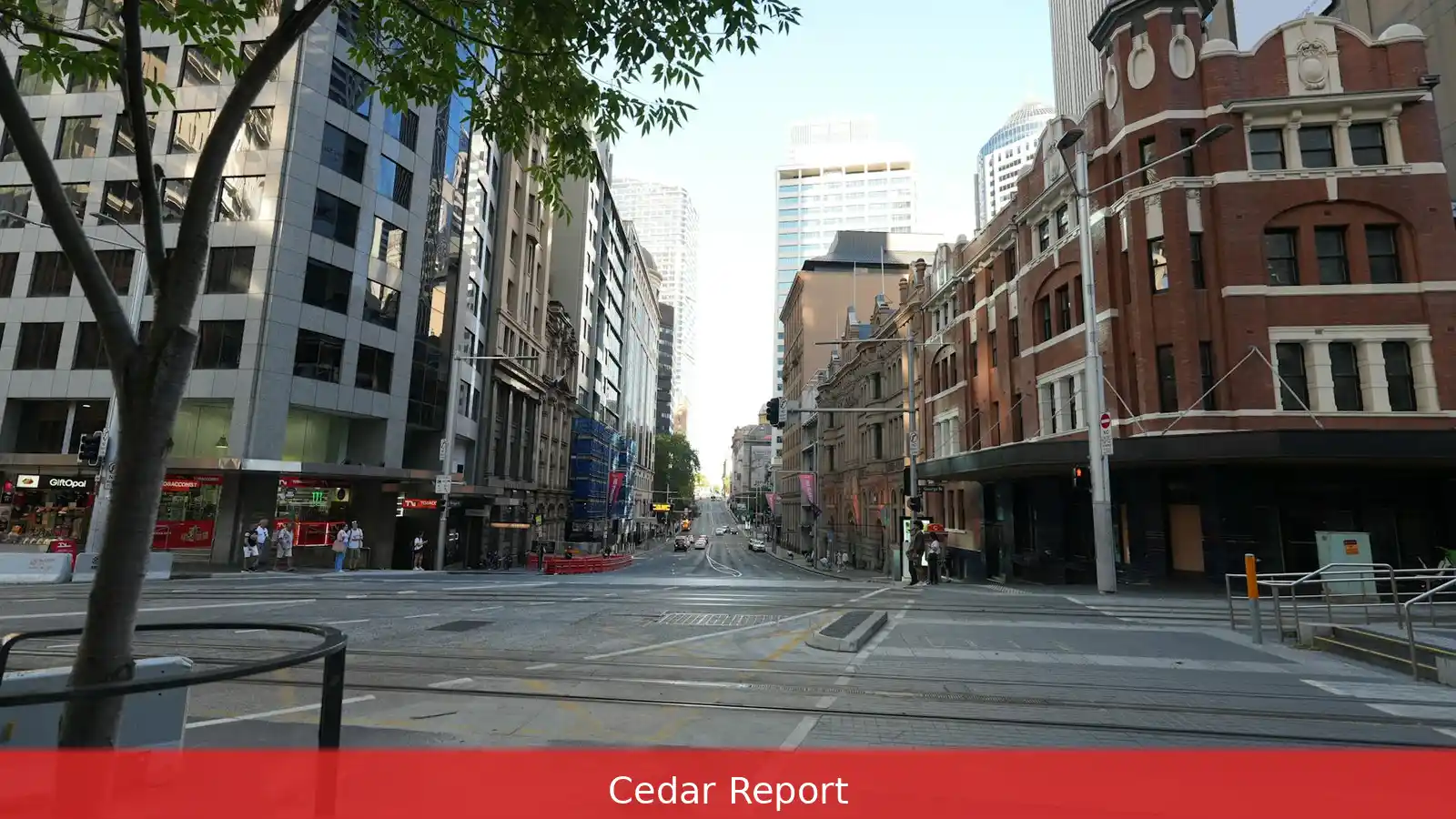
New South Wales traced its June 2021 Delta outbreak to a driver who transported international flight crew — yet the state kept an exception allowing authorised workers to travel for work under strict, enforceable rules. From June 26, 2021 authorities limited outdoor activity to essential shopping, medical care and exercise, formalised those limits as Public Health Orders and on July 28 extended them through the end of August; construction briefly paused and then resumed under regular testing, creating narrow pathways for some business travel.
What changed on the ground From June 26, 2021 New South Wales increased restrictions to curb a Delta outbreak. At the time of a July 22, 2021 interview with Professor Gigi Foster of the School of Economics at the University of New South Wales, residents were legally allowed outdoors only for essential shopping, medical care and exercise, and then usually in groups of no more than two people unless they were from the same household. Those rules were formalised as Public Health Orders. Brad Hazzard, Minister for Health and Medical Research, has the authority to sign those Orders under the Public Health Act 2010, section 7. On July 28, 2021 authorities extended the existing restrictions until the end of August 2021. The hard rules changed how businesses moved people. Construction work halted for several days as the state responded to the outbreak. That sector later restarted with a new operating requirement: workers must undergo regular testing for COVID-19. Who could still travel for work The state government carved out an exception for authorised, or essential, workers. In selected higher-risk parts of south-west Sydney only those deemed essential were allowed to leave home through to July 30, 2021, and similar limits were in force more broadly. Officials framed the approach as a balance between stopping viral spread and keeping key services running. Those rules meant some categories of work-related movement continued while non-essential travel remained off-limits. Industries that rely on in-person presence had to adapt. Construction is one concrete example: work stopped briefly, then resumed when testing was put in place as a condition for reopening. Where the outbreak started and why that matters for travel NSW Health identified the outbreak's initial case as a driver who transported international flight crew. The agency noted that the driver was a likely index case on June 16, 2021. The driver later said he believed he caught the virus at a local cafe where another patron appeared unwell, and he made that comment on June 24, 2021. Those facts link transport and international crew movements to local transmission. For companies that send staff to airports, hotels or other frontline roles that interact with travellers, that connection underlines how movement tied to aviation and hospitality can seed local outbreaks. What it meant for firms and business travellers For firms that arrange travel or send staff to client sites, the policy mix produced both limits and pathways. Limits came from the curbs on general movement and the ban on non-essential travel. Pathways came from the authorised-worker carve-out and sector-specific reopening rules tied to testing. Construction firms are an example: their short halt shows how fast activity can stop, and their restart under testing shows how regulated work can resume. Business travellers who qualified as authorised workers could continue to move for work. But they did so under a tighter framework than before the outbreak. The state's use of Public Health Orders made the restrictions legally enforceable and tied mobility to public-health criteria rather than employer discretion alone. Policy tools and their financial effects Authorities used Public Health Orders under the Public Health Act 2010 to make restrictions legally enforceable. That approach limited general movement while preserving specific exceptions that allowed essential services and business travel to continue under regulated conditions.Related Articles
- 550 Drones Launched in Daytime Wave — Ukraine's Economy Hit
- China Pauses Fiscal Stimulus as Growth Holds Fast
- Della Optima TP mini-split review: $921 unit, $3,600 install in Austin
On July 28, 2021 New South Wales extended the restrictions through August 31, 2021, meaning authorised workers could continue to travel for permitted work under the same testing and public-health conditions.
This article was created with AI assistance.



