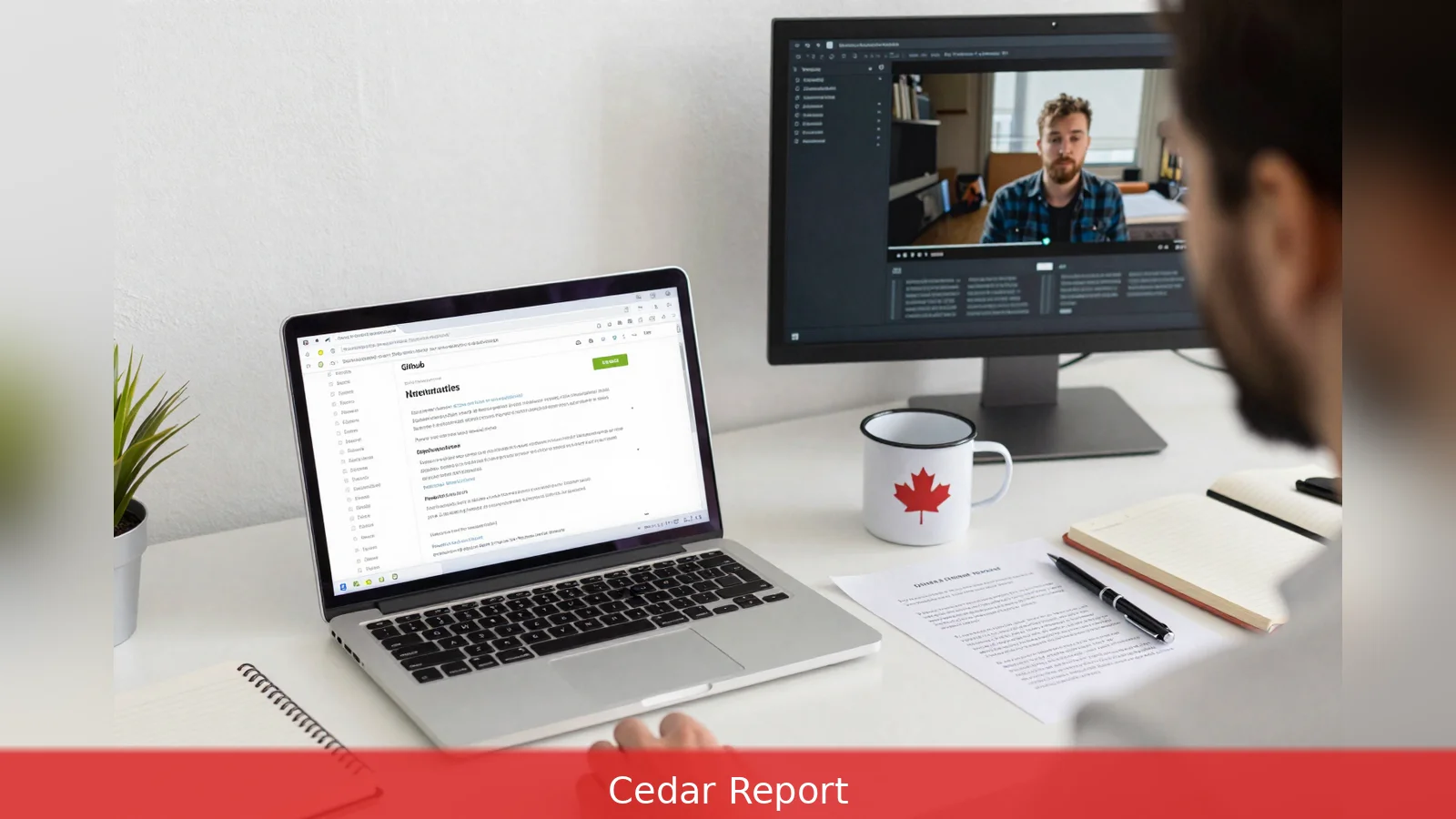
Interviewers now expect verifiable engineering outcomes, because hiring managers and recruiters are judging candidates by demonstrable work rather than job titles. That shift means a tidy resume is a ticket to a conversation, not the proof you will be hired on. The answer is a short evidence map: targeted resumes, three compact STAR or CAR stories, and artifacts interviewers can inspect on the spot. Follow these ten practical steps to turn your experience into verifiable proof in Canadian tech hiring settings.
The hiring consequence is clear: a resume alone no longer convinces, because teams want impact and verifiable artifacts that show you built something end to end.
1. Convert your resume into an evidence map
Start by turning your existing resume into a deliberate Evidence map that feeds the interview. The technical hiring environment in Canada favours concise, targeted resumes that list technologies, certifications, and a short summary of role and impact so interviewers and Applicant Tracking Systems can parse them easily. The federal Job Bank's Resume Builder offers two templates and a workflow that lets you import predefined job duties and store multiple resumes online. Use one template that matches your career pattern and keep separate resumes for different role types so you can target keywords and responsibilities to each posting, as the Job Bank suggests.
Worked example: for a backend role, create a resume variant that elevates system design and cloud services under Technical Skills, and a separate variant for SRE or site reliability roles that highlights monitoring, SLAs, and incident response.
2. Turn duty bullets into impact statements with artifacts
Replace duty-focused lines with short measurable achievements and link each to an artifact. Where possible, attach metrics such as performance improvements, latency reductions, cost savings, or revenue impact, and reference the artifact that proves it, for example an open-source repo, a live demo, or a production postmortem. Career guides for Canadian tech jobs advise grouping technical proficiencies and certifications into a distinct section and placing project links where they're easiest to find.
Worked example: instead of “maintained microservices,” write “reduced P95 latency by X by introducing connection pooling, see repo and benchmark in linked artifact.” When you can't publish proprietary code, link to a sanitized writeup, architecture diagram, or an anonymized postmortem that documents the outcome.
3. Prepare three end-to-end stories using STAR or CAR
Translate achievements into compact narratives using a problem-action-result template such as STAR (Situation, Task, Action, Result) or CAR (Challenge, Action, Result).
Prepare at least three stories that show end-to-end ownership: one technical design or system-build story, one cross-functional delivery story, and one recovery or optimization story. For each story, document the starting context, the concrete actions you led or executed, the measurable outcome, and the specific artifacts the interviewer can consult.
LinkedIn career guidance stresses that interviewers care about impact and that candidates should control the narrative by framing experience as stories rather than reciting resume lines. Worked example: a design story might open with the result, outline constraints, describe your choice between architectures, and end with the metric that moved because of your decision.
4. Make project artifacts interrogable for take-homes and demos
Treat take-home assignments and repositories as opportunities to show your design thinking. Your repo should have a clear README that explains trade-offs, testing strategy, deployment plan, and monitoring considerations. Guides for tech resumes recommend describing the technologies used, the role you played, and the project constraints; extend that practice to deliverables by including architecture diagrams, test coverage details, and performance benchmarks in your project artifacts.
Worked example: include a short section titled "Why this design" that lists alternative approaches you considered, and a small performance table that shows how your implementation performs under different loads. During a live review, narrate why you chose particular algorithms, data models, or cloud services and what you would change if the system had to scale to larger traffic or stricter SLAs.
5. Practice steering the interview with result-led openings
Interviewers won't automatically connect your resume items to their problems, so be explicit. When answering behavioural or technical questions, open quickly with the result, then explain the cause and your role. If a question doesn't fit your strongest example, pivot by saying why a different example shows the same competency and then tell that story. LinkedIn advises shaping the conversation deliberately through compact, result-led stories and asking strategic questions that reveal priorities.

Worked example: begin an answer with a sentence such as “We cut incident rate by 40 percent,” then backfill the constraints, your actions, and the artifacts that support the claim.
6. Use strategic questions to signal ownership and priorities
Prepare questions that reinforce your identity as a builder. Ask about the team’s current technical bottlenecks, release cadence, testing and observability practices, or an architectural trade-off the team recently faced. These questions do two things: they provide material to align your examples to the employer’s context and they signal that you are thinking about ownership, maintainability, and long-term iteration.
LinkedIn provides sample strategic questions that both gather information and allow you to position your prior work in direct response to the role’s challenges. Worked example: after asking about observability, reference your own monitoring dashboards or an incident postmortem as a direct illustration.
7. Publish and polish artifacts so teams can verify fast
Make repositories public where doable, add clear READMEs with demos and expected inputs, and include short screencasts or live links to deployed work. Career guides for Canadian tech applicants recommend an online presence that links resume, LinkedIn, GitHub, and deployed demos. Ensure your portfolio shows reproducible steps to run projects and highlights your contributions within team efforts.
Worked example: a README with a "Quick demo" section and a two-minute screencast lets an interviewer confirm claims in the moment, rather than wait days to revisit your work.
8. Account for soft signals and polish written materials
Recruiters often screen for fit as well as ability. Some recruiter-facing advice suggests signalling teamwork style through structured personality assessments or brief notes about your collaboration model. Always check for typos and clarity before submission. Present professional online profiles, include your location and contact links, and ensure your written materials are concise and error-free.
The Job Bank recommends storing multiple resume versions if you use a public resume tool so the first-screen resume and the interview narrative are consistent. Worked example: keep one short resume for initial screens and a more detailed portfolio link for later-stage technical interviews.
9. Rehearse technical storytelling and interview navigation
Run mock interviews that include both whiteboard design and behavioural narratives. Practice opening each example with the result, then describing constraints and the trade-offs you weighed. In mocks, focus on clarity when describing the metrics used to judge success and what you learned from the work. LinkedIn's guidance is explicit: high-performing candidates shape the conversation, connect the dots between past work and the hiring team’s needs, and steer questions to surfaces where they can demonstrate impact.
Worked example: in a mock, practise a two-minute pitch that links a resume bullet to the repo, the README, and the result metric you can show on demand.
10. Close with a concrete follow-up package
At the end of an interview, offer to send a short follow-up package: a single-page summary of the project you discussed, links to the repo and a demo, and a brief note on what you would prioritise in the first 90 days. Career guides recommend making it as easy as possible for interviewers to verify claims and to refresh their memory of your specific contributions when they compare candidates.
Worked example: promise a one-page PDF that lists the problem, your role, the result, and direct links to the artifacts you mentioned. That single document reduces friction when hiring teams do side-by-side comparisons.
In Short
First, select a resume template and build a targeted version for each role type you seek.
Second, prepare three STAR or CAR stories that show end-to-end ownership and tie each story to an artifact.
Third, publish clear project artifacts with READMEs, demos, and short screencasts so interviewers can verify claims quickly.
Throughout these steps, use the Job Bank's tools to manage resume versions, follow career guides such as Resume Canada for Tech Jobs and How to Build a Winning Resume for Tech Jobs in Canada to structure accomplishments, and apply LinkedIn's interview-shaping advice to control the narrative.
Related Articles
- Egypt one win from World Cup round of 32 vs Iran
- CRA clearance certificate: protect executors from tax liability
- 10 Best Problem-Solving Platforms for 2026
Pick a resume template and build a targeted version, prepare three STAR or CAR stories tied to artifacts you can share, and close interviews with a one‑page package linking the repo, README and a short demo. Do those three things and hiring teams can verify you built it.
This article was created with AI assistance.


