
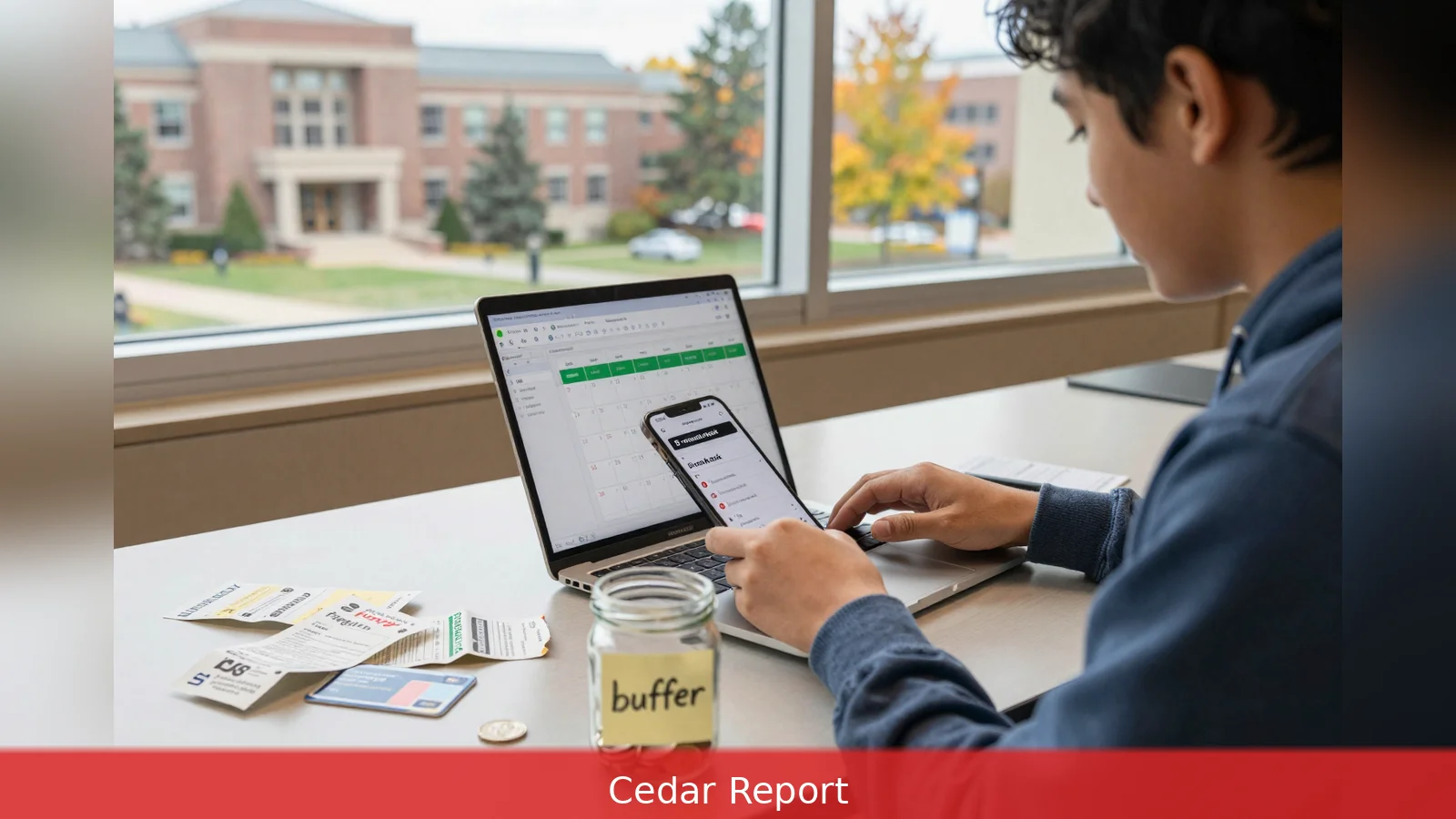
Start by listing every income source, converting semester disbursements to monthly equivalents, and scheduling a five-minute weekly check. That simple routine is the single change that stops small leaks from becoming lasting debt for students who otherwise live paycheck to paycheck. It matters: a 2024 TD Bank Group survey found 65 percent of Canadian students described themselves as financially unstable, and Statistics Canada reports household debt relative to disposable income at the highest level among G7 countries. This guide runs through nine repeatable steps to record and categorize costs, protect a small emergency buffer, cut predictable leaks and use low-friction tools to keep the plan alive.
Many students say they live paycheck to paycheck, yet the common mistake is treating irregular payments as free cash. Start by listing every source of funding and turn semester disbursements into monthly equivalents.
On the income side, include government student loans and grants, provincial programs such as OSAP, scholarships and bursaries, part-time wages, parental support and any RESP withdrawals. If a scholarship or loan arrives once per semester, divide that total by the number of months it must cover so your monthly plan reflects reality. That simple arithmetic is the most frequently skipped first step in student guides and it prevents the classic trap of spending a lump-sum early in the term.
Worked example: if a semester bursary of $1,200 is credited for four months, treat it as $300 a month. That small conversion keeps you honest about how much you can safely spend each month.
Students often underestimate variable costs or forget items such as textbooks, transit and supplies, and that undercount blows holes in otherwise balanced plans.
Record every regular cost and group it into Fixed and Variable buckets.
Fixed costs include rent or residence fees, tuition and mandatory fees, a phone plan, transit passes and recurring insurance. Variable costs include groceries, eating out, course materials, entertainment and ride-hailing trips. Use a spreadsheet, a notes app or a budgeting tool to capture transactions. Named apps commonly suggested by student-facing guides include Mint and Spendee, and some prepaid or no-fee card apps offer automatic categorisation.
Worked example: tally your rent as a fixed cost, but estimate groceries weekly and multiply to get a monthly total. Remember to add an allowance for textbooks and course supplies that may appear only a few times a year.
Many students think budgeting means giving up all fun, while effective budgets simply prioritise limited cash toward essentials and short-term goals. Separate needs from wants, set a modest discretionary allowance, and put the remainder toward a savings or debt buffer.
Guides recommend either a simple percentage split or a cash-envelope approach for people who prefer physical controls. Weekly or biweekly reviews are also advised so you catch an upward drift in discretionary spending before it forces a credit-card balance that attracts interest. Allocate first to essentials, second to a small emergency buffer, third to a modest discretionary amount and fourth to extra loan payments when possible.
Worked example: if groceries and rent are covered, assign a fixed weekly amount for eating out. If you find you exceed it often, either lower the weekly allowance or move some funds from the discretionary line into your buffer.
Students without a money buffer are one mechanical shock away from credit-card debt. Build a small, accessible savings fund for predictable shocks such as a broken laptop, a month of reduced hours or an unexpected medical bill.
Advice also covers how to use loan disbursements. Plan to have loans fund education costs rather than discretionary spending. On the tax and credit side, file your income tax return to access benefits you may qualify for, including the GST/HST credit, and to claim tuition tax credits that reduce future tax liabilities. Check the Canada Revenue Agency for current filing deadlines. Campus financial aid offices commonly maintain emergency bursary programs for students in acute financial hardship, and they're worth contacting before turning to high-interest credit.
Worked example: set aside the first paycheck after a break into two parts: one portion for immediate bills and a second that tops up your emergency buffer by a modest amount.

Small, regular conveniences add up. Student guides repeatedly call out food delivery, recurring streaming and app subscriptions, and impulsive gadget upgrades as the largest, easiest-to-fix drains on student budgets.
Practical tactics multiple sources recommend include cooking at home more often, renting or buying used textbooks, auditing and cancelling unused subscriptions quarterly, using a transit pass instead of taxis when doable, and choosing a bank account with low or no monthly fees to avoid avoidable charges. These moves don't require discipline alone, they require habit design and simple rules that prevent impulse.
Worked example: schedule a quarterly subscription audit and cancel any service you didn't use in the last three months. Replace two food-delivery orders per week with a home-cooked meal and watch how the monthly food bill drops.
Many students try too many tools and then abandon budgeting altogether. The sustainable approach is low friction: pick one method, use it consistently for a month, then refine allocations.
For automation, apps that link accounts and categorise spending reduce the friction of weekly check-ins. For those who prefer manual control, the envelope method or weekly cash withdrawals force visible limits. Set a short, fixed habit such as a five-minute weekly reconciliation so budgeting becomes a regular practice rather than an occasional audit. Student-oriented sites and coaches stress running any method consistently so you create meaningful data you can act on.
Worked example: commit to tracking for 30 days. If you use an app, open it once a week and label any uncategorised transactions. If you prefer envelopes, withdraw the weekly discretionary amount and keep the receipts in a single envelope to compare at week end.
7-9. Guard, use supports, and build habits
Younger Canadians are frequent targets of financial fraud attempts, and many don't discuss incidents with family. That gap leaves students exposed.
Basic precautions include being sceptical of unsolicited requests for money or personal details, verifying any loan or bursary offers through official school or government channels, and talking with a trusted advisor or campus financial office if something seems off. Student guides recommend documenting suspicious contacts and reporting fraud attempts through official consumer protection routes.
Worked example: if someone offers a private grant by direct message, stop, check the campus financial aid office website for the same program and confirm with the office by phone before sharing personal or banking details.
Many students underuse institutional safety nets. Financial literacy programs, emergency bursaries, targeted grants and tax credits can change cash flow and reduce short-term reliance on high-interest credit.
The Financial Consumer Agency of Canada and campus financial aid offices are recommended places to find unbiased tools, calculators and advice. Where an immediate cash need exists, ask the financial aid office whether emergency grants or short-term loans are available before turning to credit cards. These supports are part of a practical budget, not an admission of failure.
Worked example: before applying for a payday-style loan, contact the campus financial aid office to ask about an emergency bursary or short-term bridge loan that carries lower or no interest.
Budgeting is trial and error. The most durable improvement comes from measuring variances, adjusting allocations and building slightly larger buffers when income is unpredictable.
Guides agree that students who check their progress weekly and make small corrections tend to graduate with less debt and fewer late-payment penalties than peers who do not. Reassess your budget quarterly, and adjust for seasonal changes such as higher summer earnings or heavier fall course fees.
Worked example: every quarter, compare actual spending to budgeted amounts. Move small surpluses into your emergency buffer or apply them to an upcoming textbook purchase rather than letting them disappear into untracked discretionary spending.
Practical cautions and how to start this afternoon
Guides align on steps but differ on specific numerical targets and promotional product claims. Some independent blogs recommend particular no-fee accounts or cashback card pairings and present large-savings claims tied to switching banks. Those practical claims vary by city and individual situation, so treat institution-specific dollar claims as illustrative rather than universal. Where government rules matter, rely on official authorities such as the Canada Revenue Agency for filing deadlines and the Financial Consumer Agency of Canada for consumer protection rules.
That means use third-party product recommendations as starting points, not promises. Check fee schedules, compare what an account does for you personally and factor in how much time you can spend on budgeting before making a switch.
If you are ready to act, do three things now: tally every income source and convert any semester payments to monthly equivalents; list fixed monthly costs; and schedule a five-minute weekly check in your calendar. These three actions create the information you need to make the nine steps meaningful.
Keep your first month simple. Track expenses, make the smallest realistic buffer deposit, and cancel any subscription you haven't used in three months. If you haven't filed a return for the year, file it and check the Canada Revenue Agency for current deadlines; filing remains the route to access credits and refunds that can improve your cash flow.
Related Articles
- CRA clearance certificate: protect executors from tax liability
- GST/HST credit: who gets C$519 or C$533
- GST/HST credit up 2.7%: who qualifies and how to get it
Begin by tallying every income source and listing fixed monthly costs, then set a five-minute weekly check to compare actual spending against the plan. If you need immediate help, contact your campus financial aid office about emergency bursaries before taking on high-interest credit. That routine is the single change that makes small leaks stop becoming lasting debt.
This article was created with AI assistance.


