
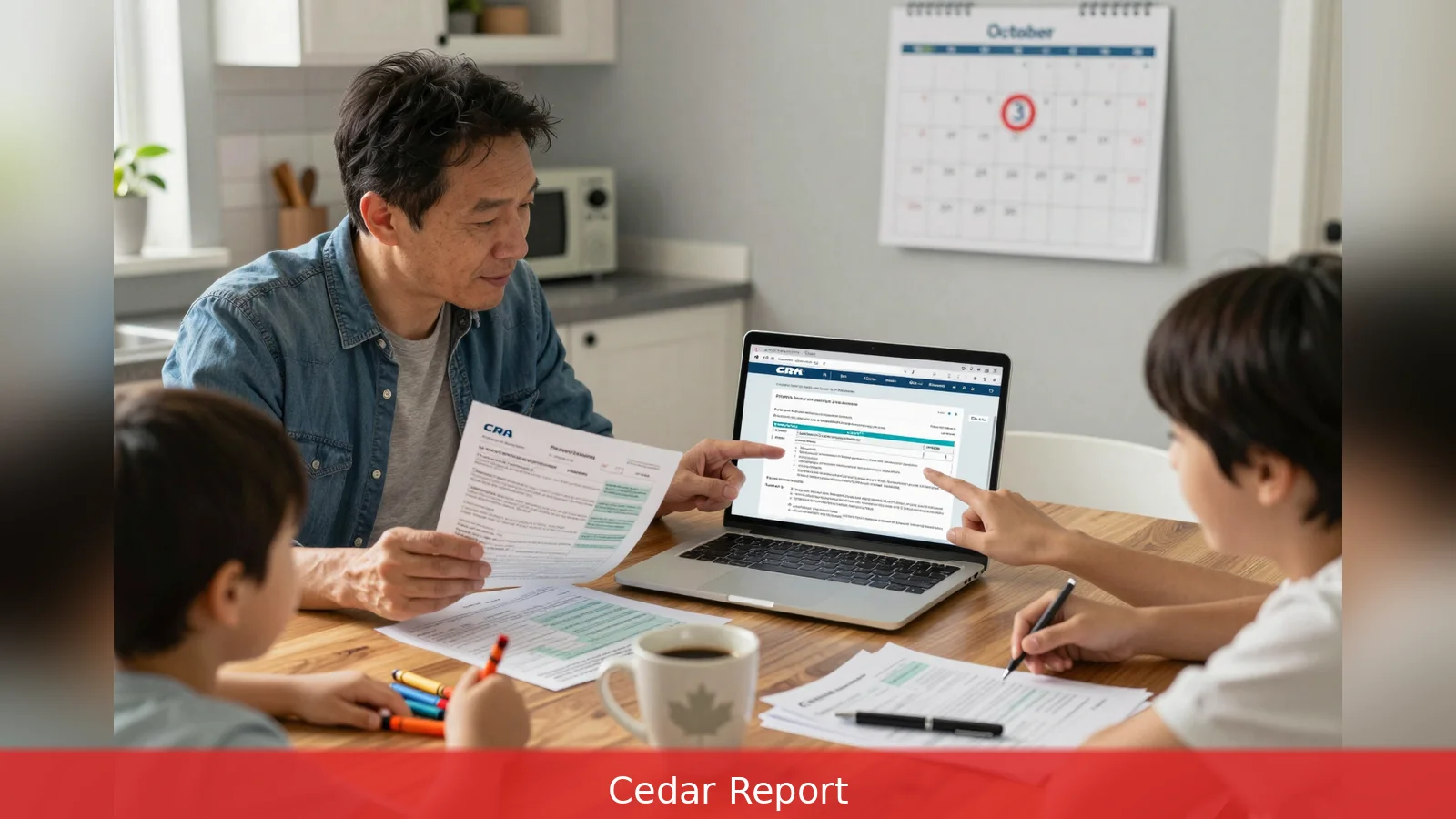
Most people will receive the 2.7 percent increase to the GST/HST credit automatically; you do not usually need to file a separate application. The credit is a tax-free, quarterly top-up intended to help low- and modest-income families, and Ottawa published the adjusted maximums for the year: up to $533 for a single person, $698 for a person who is married or has a common-law partner, and $183 for each child under 19. Eligibility depends on age and residency: you generally must be at least 19 and a Canadian resident for income tax purposes in the month before the Canada Revenue Agency issues the quarterly payment, with narrow exceptions for some under-19s and shared custody arrangements. The CRA credited the increased amount in early July for that quarter.
Most people don't need to apply, but whether they receive the increased payment hinges on a narrow residency and filing rule set by the federal government and administered by the Canada Revenue Agency.
1. Check the basic eligibility tests
The first gate is age. The government says you are generally eligible if you are at least 19 years old in the month before the CRA issues a quarterly payment. This second gate is residency. You must be a Canadian resident for income tax purposes in that same month. Those two conditions are the canonical triggers the government uses when the CRA decides who gets a payment for the coming quarter.
If you are under 19, the government lists two narrow paths to qualify for the same period: one, if you have or had a spouse or common-law partner in the relevant month; two, if you are or were a parent who lived with your child. For families who share custody of a child, the government said each parent may receive half of the child component for that child.
Worked example: First, imagine a 25-year-old who files taxes and is resident in Canada in the month before a payment. That person meets both the age and residency tests. Second, imagine an 18-year-old who's a parent and lives with their child for the month before the payment. Under the government’s rule, that 18-year-old may qualify through the parent exception.
2. Make sure family net income is recorded correctly
The government ties both eligibility and the size of the payment to Family net income, which means the CRA will use the information already on your tax return to calculate the credit. The announcement published the adjusted maximum amounts for the year. It didn't provide detailed income bands or cut-offs in its summary.
That omission matters because the numbers released are maximums, not guaranteed sums. The top figures are up to $533 for a single person, $698 for a person who's married or has a common-law partner, and $183 for each child under age 19. Families with higher net income will see smaller payments or no payment, depending on the CRA’s income-based calculation.
Worked example: A couple who file a joint net income that places them below the CRA’s phase-out range would be eligible for some portion of the $698 maximum. The CRA will determine the exact amount from the net income figures on the tax return it receives for the assessment year the government used.
3. Treat your tax return as the application
Filing your annual tax return is the practical step the government identifies as the application for most people. The government states that most individuals don't need to submit a separate form to get the GST/HST credit. Instead, the CRA uses the details on your return to assess whether you meet the age, residency and family-income conditions for the quarter.
That makes two routine behaviours decisive. First, file on time. Second, ensure your personal and family information is recorded correctly on the return so the CRA has accurate residency, marital status and dependent information to work with. Because the CRA checks residency and filing information for the month before a scheduled payment, timing and accuracy determine whether you appear on the eligibility list for that quarter.
Worked example: If someone files late or with incorrect marital status for the taxation year the CRA examines, the agency may not see the qualification that would have entitled them to a payment that quarter. The government’s guidance makes clear the return is the mechanism to be included, so correct and timely filing is the practical step to secure entitlement.
4. Expect payments on the CRA quarterly timetable and at the adjusted amounts
The government described the GST/HST credit as a tax-free, quarterly payment. For the year covered by the announcement, Ottawa applied a 2.7 percent increase and published the adjusted maximums: $533 for single individuals, $698 for married or common-law couples, and $183 for each child under 19. The CRA issues the payment at the beginning of the payment month.

The increased amounts were credited in early July for that quarter, and the government scheduled the next and final quarterly payment for October 3, 2025. The announcement also referenced a recent precedent: during 2022, when inflationary pressure was higher, Ottawa temporarily doubled the GST credit for six months. That example was offered as precedent for how the credit can be adjusted in response to economic conditions, while the current 2.7 percent rise was presented as a routine adjustment.
Worked example: Eligible recipients who met the residency and filing rules in the month before the July payment would have seen the adjusted amounts applied then. Parents who share custody of a child should expect the CRA to apply half of the child component to each eligible parent, per the government’s statement.
Common questions and practical points
Is the payment taxable? No. The government described the GST/HST credit as tax-free, so recipients don't include the payment as taxable income.
Do I have to reapply each year? No separate application is needed for most people. The CRA checks your tax return and residency status for the month before each quarterly payment, so filing annually remains the practical mechanism to be considered.
What if my situation changes? The government made the timing rule explicit: the CRA determines eligibility using residency and tax-filing information for the month before a scheduled payment. That timing means changes in residency, marital status or the addition or removal of a dependent should be reflected on the relevant tax return so the CRA can take them into account for the next quarterly assessment.
Shared custody. The government said parents in shared custody situations may be eligible for half of the child component for that child. That's a precise rule the CRA will apply when the custody situation and family income are recorded on the returns it uses.
Below are a few short scenarios that follow only the government’s published rules.
Scenario A: A single person aged 30 who files taxes and is resident in Canada in the month before payment. They qualify for a portion of the $533 maximum depending on family net income.
Scenario B: A married couple who file jointly and are resident in the relevant month. They may be eligible for up to $698 together, reduced depending on family net income.
Scenario C: Two parents who share custody of a child under 19. If both meet the residency and filing tests, each parent may receive half of the $183 child component for that child.
Timing and paperwork checklist: First, confirm you are a Canadian resident for income tax purposes in the month before the CRA payment. Second, file your income tax return on time and enter correct information about your age, marital status and dependents. Third, ensure family net income on the return is accurate because the CRA uses it to size the payment. Fourth, check the CRA payment dates so you know which monthly residency snapshot the agency will use.
How the increase was positioned. The government framed the 2.7 percent rise as a routine adjustment to the GST/HST credit amounts for the year, not as a one-off emergency measure. By contrast, it explicitly referenced the 2022 response when Ottawa doubled the credit for six months because of heightened inflationary pressure, presenting that earlier move as an example of how the program can be altered when conditions warrant it.
Where the CRA fits in. The Canada Revenue Agency administers the payments.
The agency uses tax returns and residency information to decide who gets a payment for each quarter and to calculate the amount. That administrative role makes the CRA the practical contact point if recipients have questions about timing or amounts.
In short:
1. Be 19 or meet the government’s under-19 exceptions and be a Canadian resident for income tax purposes in the month before a payment. 2. File an accurate tax return on time because the CRA will use it to assess eligibility and the payment size. 3. Understand the published maxima are $533 for singles, $698 for couples, and $183 per child under 19, and actual payments depend on family net income. 4. Expect payments on the CRA’s quarterly timetable; the increased amounts were applied in early July and the government planned the final payment for October 3, 2025.
Related Articles
- Apply for CERB judicial review in Federal Court, 30-day limit
- Direct deposit for Canada Child Benefit: 6 ways to sign up
- Automate vendor contract comparison and negotiation in 7 steps
Final payment for the year is scheduled for October 3, 2025. To be included, ensure you are a Canadian resident for income tax purposes in the month before that payment and that your tax return records your residency, marital status and dependents accurately.
This article was created with AI assistance.


