
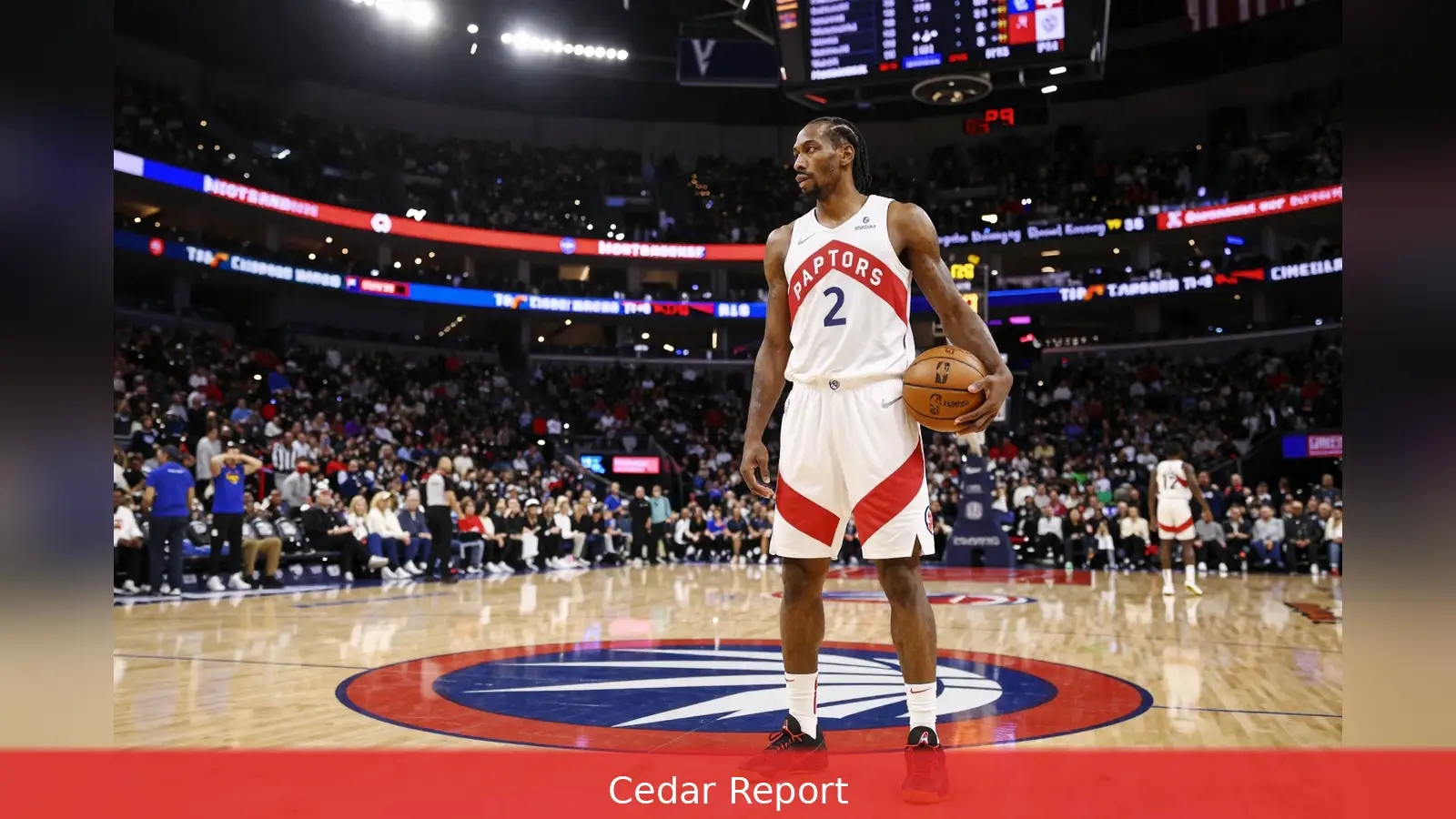
Toronto surrendered two unprotected first-round picks to buy a one-season championship window around 35-year-old Kawhi Leonard, a gamble that narrows the club's timeline while he remains on the court. Shams Charania of ESPN first reported the deal and the Associated Press confirmed it: the Clippers send Leonard to the Raptors in exchange for Brandon Ingram, Gradey Dick, unprotected first-round picks in 2031 and 2033, a 2027 first-round pick swap and two second-rounders reported as 2030 and 2033. Leonard's salary is a one-season guaranteed amount, concentrating Toronto's short-term hope and its financial uncertainty into a narrow window, while Los Angeles gains deep draft currency and flexibility.
The Clippers took youth and draft currency, while the Raptors took an elite but ageing two-way superstar, and that contrast is the trade's point. Los Angeles walked away with Brandon Ingram, a proven scorer, and Gradey Dick plus multiple future picks that give the franchise timeline control. Toronto took Leonard, whose incoming salary is a one-season guaranteed amount and whose contract technically expires after that season, according to reporting.
The deal in detail
Shams Charania of ESPN first reported the trade and The Associated Press confirmed it. Toronto acquires Kawhi Leonard from the Clippers. In return the Clippers receive Brandon Ingram, Gradey Dick, unprotected first-round picks in 2031 and 2033, a 2027 first-round pick swap and two second-round picks reported as 2030 and 2033. The package moves deep future draft capital out of Toronto and into the Clippers' balance sheet.
Leonard turned 35 this week and carries a one-season guaranteed salary. The contract technically runs only through next season, which concentrates both Toronto's short-term hope and its financial uncertainty into a narrow window. Multiple reports say Leonard is open to signing an extension with the Raptors, a decision that would reshape Toronto's cap planning and the long-term value of the assets it surrendered.
Toronto is betting short. The Raptors enter this season with a core built around Scottie Barnes, supplemented by supporting wings, guards and developing prospects, according to Canadian coverage. General manager Bobby Webster's front office is signalling a move toward immediate contention rather than a gradual rebuild, but the roster still faces depth questions that could force further moves in free agency or additional trades.
The risk is concentrated and clear. The first-round picks the Clippers acquired land in 2031 and 2033, years when Leonard will be late in his career or likely retired. If Toronto slides in those seasons, the picks could be very valuable to Los Angeles.

In effect the trade transfers future upside to the Clippers and gives Toronto a narrower window to capitalise while Leonard remains productive.
For the Clippers, the swap is a pivot. Leonard's seven seasons in Los Angeles delivered individual excellence but limited postseason progress and intermittent availability. By taking back Brandon Ingram, an established scorer and a younger core piece, alongside Gradey Dick and long-term picks, the Clippers gain flexibility. The draft assets and a younger timeline create roster-building currency that can be used to rebuild sustainably or to pivot back to contention on a different timetable.
Leonard's recent performance makes the calculus. Last season he averaged 27.9 points, about 6.3 rebounds and roughly 3.6 assists per game while shooting above 50 percent from the field, evidence across multiple reports that he has returned to All-NBA form.
Those numbers explain why Toronto felt compelled to act now. But Leonard's injury history is significant: he has never played more than 74 games in a single season and he missed the entire 2021-22 campaign with a partial ACL tear. The trade hinges on his availability, and Toronto accepts a high injury risk in exchange for top-level production when Leonard is healthy.
There is also an off-court layer. Leonard signed a three-year deal with the Clippers after leaving Toronto in 2019 and later agreed a four-year contract that included a player option, according to reporting. Separate coverage notes an NBA investigation into whether a sponsorship arrangement tied to an Aspiration deal affected salary-cap compliance with the Clippers. Those threads don't change the on-court impact but they add legal and accounting context to a franchise reshuffle.
Practically, the Raptors inherit Leonard's contract leverage. If he signs an extension, the assets Toronto surrendered will look different in value.
If he declines an extension or can't stay healthy, the trade's cost will loom. Toronto's front office has signalled urgency. The team traded deep future capital to compress a championship chase into the seasons Leonard can meaningfully affect.
For fans and governors of the franchise the choice is stark. Keep the picks and continue a multi-year rebuild, or spend high-cost, high-risk capital now in hopes of converting a 46-win team into a title contender. The Raptors chose the latter.
Related Articles
- Kylie Jenner pulls $48M Holmby Hills listing
- Charter stock jumps 12% as SpaceX tie-up poses frenemy risk
- MSI Claw 8 EX AI+ outlasts Legion Go with sustained performance
The immediate decision to watch is whether Leonard signs an extension with the Raptors and how that alters Toronto's cap picture; his current deal expires after next season and multiple reports say he is open to extending with the club. Originally reported by cbc.ca.
This article was created with AI assistance.


