
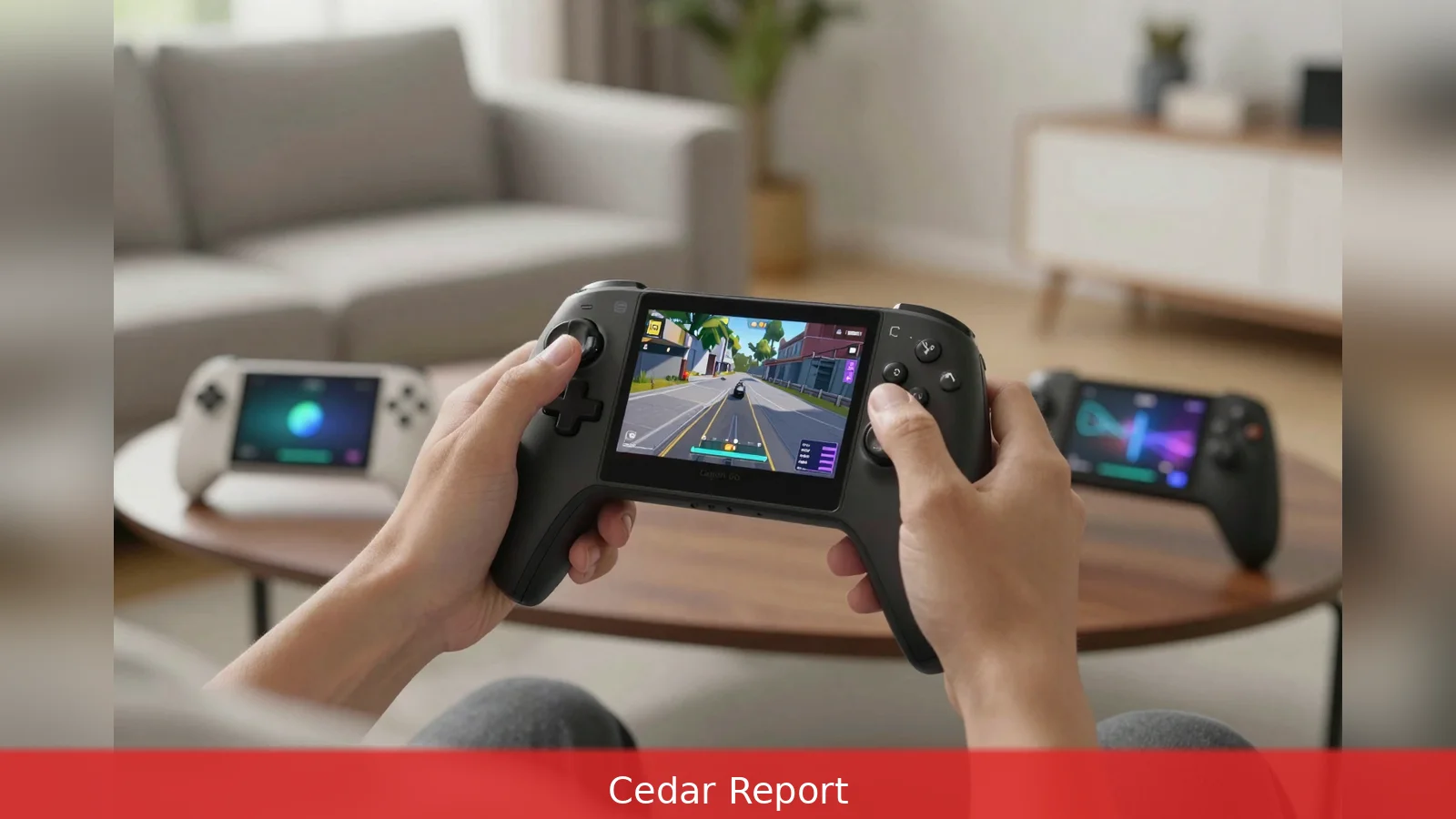
MSI's Claw 8 EX AI+ is pricier than most Windows handhelds, but reviewers say it delivers sustained gaming performance that leaves the Legion Go trailing. Early hands-on tests and full reviews from ZDNet, PCMag, XDA-Developers and GadgetGuy credit the Claw with stronger cooling, noticeably improved ergonomics and an Intel Arc G3 Extreme chipset that sustains frame rates in modern titles. The device pairs a large battery, Gen4 NVMe storage and a flagship RAM configuration with an 8-inch Full HD+ display and modern wireless connectivity, positioning it as a premium gamepad-style PC. For gamers and hardware suppliers the Claw signals a push toward bespoke handheld silicon and higher bill-of-materials in a segment that had been dominated by AMD Z-series designs.
Expensive handhelds often trade peak frame rates for short bursts, but MSI's Claw 8 EX AI+ appears to deliver both sustained clocks and longer playable sessions. That's the consistent read across reviewers who measured real-game performance, thermal behaviour and ergonomics rather than relying on peak benchmark numbers alone.
Chipset and sustained performance
At the heart of the story is Intel's Arc G3 Extreme system-on-chip. Reviewers describe this as the first Arc part tuned specifically for handheld gaming and notably more efficient in a power-constrained form factor. PCMag, reporting on hands-on tests at Computex, said the G3 Extreme combines multiple performance and efficient CPU cores with an Arc B390-style GPU. In their brief tests the chipset produced playable frame rates across modern titles at the device's native settings, and XDA-Developers called the Arc G3 Extreme the most powerful handheld chipset they had tested, crediting it both for improved graphics throughput and for enabling longer sessions before thermal throttling became noticeable.
The practical consequence is that the Claw spends more time at playable frame rates in real titles, rather than spiking briefly and then falling off as temperatures climb. Multiple reviewers pointed to the Arc G3 Extreme as the technical enabler of that steady throughput, which is the difference between a short showcase demo and a genuinely playable handheld experience.
Hardware choices and ergonomics
MSI backed the silicon with a high-end hardware stack. Review coverage lists a large battery, Gen4 NVMe storage and the flagship SKU's top-tier RAM option. The Claw uses an 8-inch Full HD+ panel with a high-refresh operating range, and it includes modern wireless standards, while testers said the redesign's focus on balance and flared handles gives a lighter, more controller-like feel in the hands.

Cooling was another repeated theme. Reviewers credited a beefed-up thermal solution with the handheld's ability to sustain higher clocks under load. That thermal headroom is what lets the Arc G3 Extreme show its strengths over longer sessions, and it's also where MSI's engineering choices diverge from rivals.
ZDNet and XDA both highlighted the chassis and airflow design as key to the Claw's endurance advantage.
Still, reviewers were candid about trade-offs. GadgetGuy and ZDNet noted software rough edges, describing efforts to smooth Windows into a more console-like 'Xbox Mode' experience but warning that system software remains buggy in places. PCMag and XDA emphasised that while the hardware and silicon are strong, the premium asking price will constrain the addressable market.
Price and availability are concrete but varied by region. Review outlets reported the Claw 8 EX AI+ was being offered for preorder in flagship configurations and positioned at the high end of the handheld market. Early Computex coverage suggested different launch estimates, but retail positioning has settled in the premium segment reflected in preorders and regional comparisons that GadgetGuy published.
For those who prioritise raw, sustained performance in a handheld form factor the Claw is a direct answer. For buyers who prioritise value, a lighter price tag or rock-solid software polish, the economics are less friendly. Reviewers across outlets agree the device is aimed at high-end buyers who want a PC-grade experience in a gamepad package, rather than mainstream mobile gamers chasing the best price-per-frame.
Beyond consumers, the Claw's launch has implications for component vendors and rival OEMs. The move to an Arc G3 Extreme in a handheld shows that Intel and partners will press for bespoke handheld silicon, and that OEMs are willing to accept higher bill-of-materials to chase sustained performance. That shifts the competitive map away from the AMD Z-series hegemony this category has seen up to now.
Related Articles
- World Bank approves $1.1B to protect Bangladesh food supplies
- Micron still trades cheap after 325% rally
- Shannen Doherty's Malibu home sells for $7.65 million after price cuts
The clear, concrete takeaway is this: the Claw 8 EX AI+ ships as a flagship RAM and storage configuration at a premium preorder position, and reviewers point to Intel's Arc G3 Extreme, beefed-up cooling and controller-like ergonomics as the combination that lets it sustain longer playable sessions than the Legion Go.
This article was created with AI assistance.


