
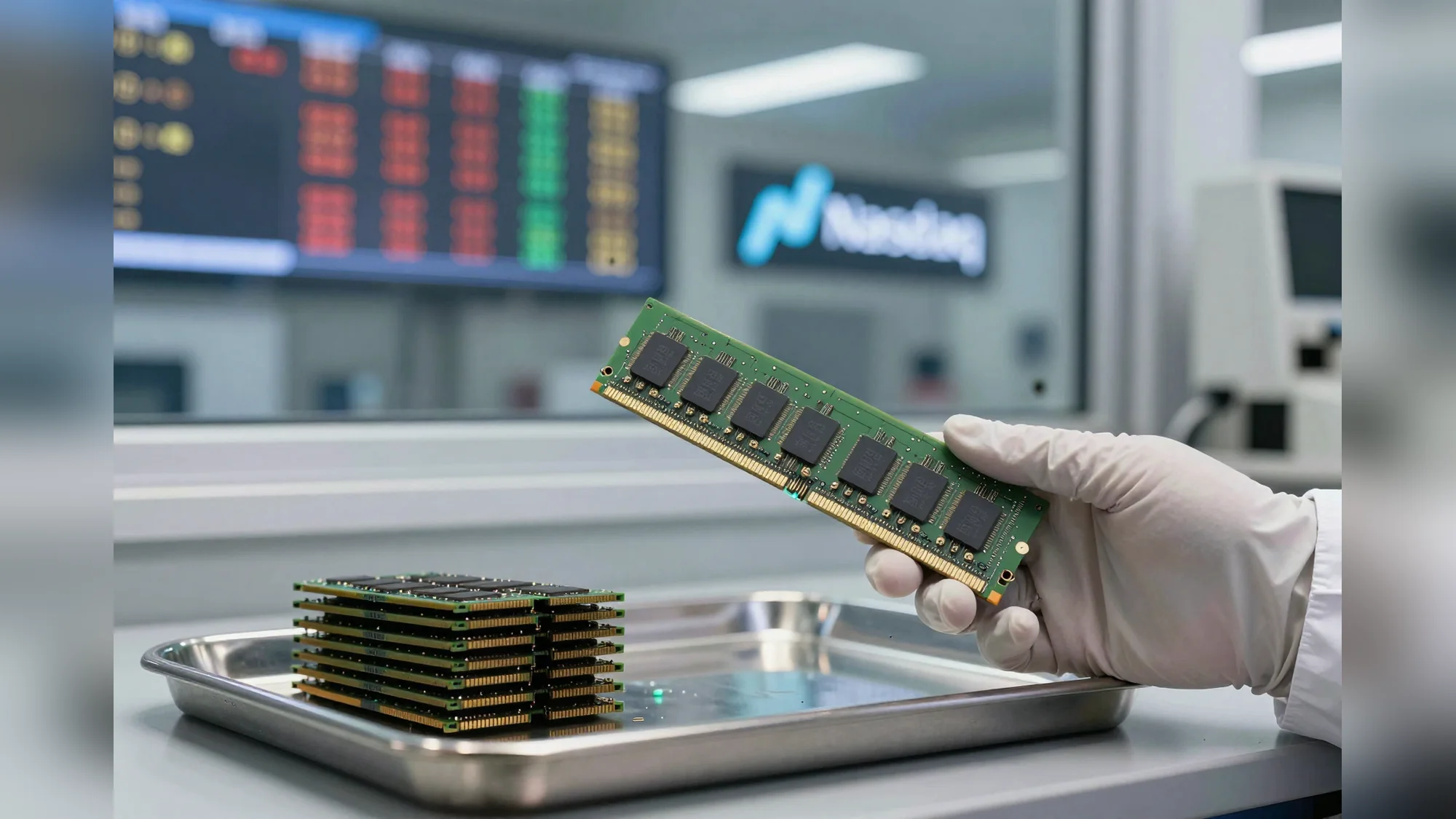
Chip buyers and device makers will face roughly 20% higher DRAM unit prices, after reports that Samsung Electronics is proposing an average selling price increase tied to accelerating AI demand and persistent supply bottlenecks. The proposal circulated ahead of Samsung's preliminary second-quarter results, due Tuesday. Analysts point to steep earlier price moves this year, rising bit demand for AI workloads and constrained supply as the drivers, and Citi's Peter Lee has already modelled higher product and earnings forecasts. The next concrete test will be Samsung's disclosures and management commentary when the company reports.
Customers that buy high-capacity memory modules will confront materially higher unit prices, because Samsung Electronics is reported to be proposing an average selling price increase for DRAM of roughly 20%. The reporting links the move to ongoing bottlenecks in the memory market and accelerating demand from AI infrastructure.
The immediate losers are purchasers of high-end DRAM, including laptop and smartphone vendors and operators buying memory for enterprise AI systems. Device makers have already signalled pass-through pressure: Lenovo warned that high memory prices are likely to be the new normal, and Apple raised prices on iPhones and MacBooks earlier in the year citing memory-chip costs.
Analysts quoted in the reporting pointed to a pattern of steep price moves in 2026 that set the backdrop for Samsung's proposal. Some memory prices spiked in the first quarter and rose further in the second. UBS analysts projected structural demand growth for high-bandwidth memory, saying bit demand is set to outpace supply. That gap is the main underwriting for sustained upward pressure on average selling prices and greater negotiating power for suppliers.
Citi analyst Peter Lee modelled the impact on specific products. He raised his fourth-quarter 2026 price forecast for Samsung's 64-gigabyte high-end memory stick from $1,586 to $1,805. Citi also lifted its operating profit forecasts for Samsung, projecting roughly 20 percent growth for 2026 and about 24 percent for 2027, and adjusted its target price on the stock accordingly. The market reacted: Samsung's shares rose about 3 percent on the trading day the reports circulated, and Micron traded higher in U.S. premarket trade amid the pricing backdrop.

Why U.S. markets are on the agenda
The reporting linked price-setting and capital flows. Memory contracts mix long-term agreements with spot purchases. Analysts believe sustained strength in enterprise AI will tighten pricing in long-term agreements and lift average selling prices across the market, not just for Samsung.
At the same time, hyperscalers are shifting more of their capital spending toward suppliers as they expand AI infrastructure, which pushes revenue toward chip makers and supports supplier bargaining leverage.
That investment dynamic helps explain why Samsung might consider broader access to U.S. capital. A major peer, SK hynix, is moving to raise new equity via Nasdaq depositary receipts in a listing that could total up to $29 billion, according to the reporting. That step illustrated the potential appeal of tapping U.S. investors to finance fabrication and R and D, broaden a shareholder base, increase liquidity and possibly gain inclusion in U.S.-based benchmarks and ETFs. Samsung already has global depositary receipts trading in London.
The possible combination of higher DRAM prices and easier access to U.S. capital offers a simple calculus for investors and corporate planners. Stronger pricing would boost near-term earnings, while U.S. market access would make it easier to fund the capacity build and R and D that suppliers need to meet rising AI demand. The decision is strategic: higher prices improve margins now, and fresh capital would underwrite expansion to meet the very demand that's driving those prices.
Market mechanics remain negotiation-driven. Long-term agreements between suppliers and large buyers determine much of the flow and pricing, but spot contracts and quarterly inventory swings can amplify moves. Analysts quoted in the reporting expect capex by hyperscalers and enterprise AI buyers to continue shifting revenue toward semiconductor suppliers even as those buyers themselves keep investing aggressively.
Samsung's preliminary second-quarter results are due Tuesday. The company's disclosures and any management commentary will be the next concrete milestone for confirming reported pricing changes and whether plans for greater U.S. market access proceed. Originally reported by marketwatch.com.


