
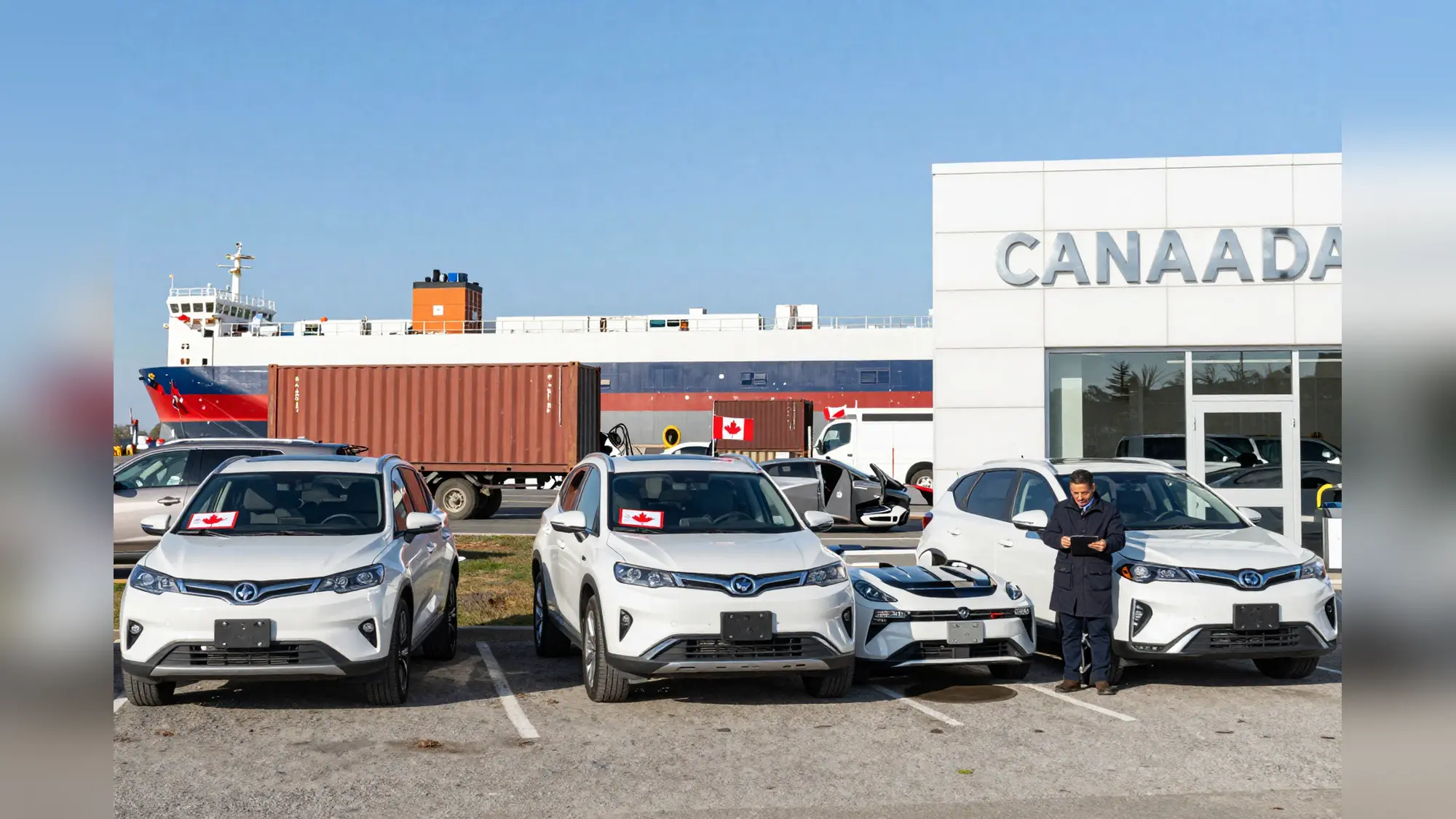
49,000 passenger vehicles is the annual quota Ottawa approved in March 2026 that lets Chinese-built cars enter Canada at a 6.1% tariff. The move replaces the 100% surtax Ottawa imposed in October 2024 and reopens a regulated channel after imports plunged in late 2024. Statistics Canada trade records and federal quota documents show the first allocation window, March to August 2026, is capped at 24,500 vehicles, and the tariff stays at 6.1% for cars within the quota, rising to an annual cap of 70,000 by year five. The next concrete milestone is August 31, 2026, when the government will report how shipments matched the 24,500 cap.
49,000 is the first-year cap, rising to 70,000 by year five, and it comes with a 6.1% tariff for vehicles that enter under the quota. Before Ottawa imposed a 100% surtax in October 2024, Chinese-origin passenger-vehicle imports peaked in 2023 at roughly CAD 2.2 billion, which trade reconstructions and Statistics Canada data translate into about 44,400 vehicles, with the Shanghai-built Tesla Model Y dominating that lane. After the surtax, quarterly imports collapsed by roughly 92 percent as customs declarations and shipping patterns changed. The March 2026 framework restores a far lower tariff for permitted shipments, signalling a controlled reopening rather than a full market liberalization.
The change shifts the balance across multiple groups. Auto dealers and importers gain a legally defined but limited supply of lower-cost electric vehicles, which industry consultants say will act as a beachhead for broader North American expansion. Canadian consumers stand to see new lower-priced EV models arrive, led by Chinese marques that undercut established brands on sticker price while offering features such as long-range battery chemistry and fast-charging architectures.
Manufacturers and dealers moved quickly after the policy shift. BYD has begun regulatory compliance filings and is planning a dealer rollout in Canada, advisory firms and company statements reported.

Lotus and other Chinese-owned marques have signalled small initial retail footprints, and Chery held meetings with Canadian dealers. Other Chinese groups also have teams working on Canadian launches.
Price and incentive dynamics will matter to buyers. Market trackers focused on Chinese EV models report aggressive pricing, with entry models advertised in the low tens of thousands of Canadian dollars and headline models promoted as substantially cheaper than comparable Teslas, Korean brands, or legacy Detroit EVs. Provincial programs such as Quebec’s Roulez vert can further reduce purchase prices for eligible vehicles by up to CAD 2,000.
Chinese-built cars remain ineligible for the federal EVAP incentive, which applies only to vehicles made in Canada or in free-trade agreement partner countries, according to marketplace guides and manufacturer statements.
Warranty, safety ratings, and battery chemistry are central to manufacturers’ sales pitches. Several Chinese models have Euro NCAP scores and use lithium-iron-phosphate or other chemistries manufacturers say improve cold-weather resilience. Those points will matter in provinces with long winters, and they're part of how brands plan to argue value against established rivals.
Trade-data nuance will shape how the lane is reported. Statistics Canada records passenger cars and light trucks under a combined code that groups battery-electric, plug-in hybrid and internal combustion vehicles. Analysts tracking the lane convert customs value into estimated unit counts using an assumed declared customs value per vehicle, a method that carries a margin of error that will evolve as the import mix shifts away from the Shanghai-built Model Y toward a broader set of Chinese brands and price points.
Related Articles
- Canada recession: two quarters of annualized decline
- Canada inflation rises to 2.8% as gasoline jumps 28.6%
- US presses Asian deals to reduce China's rare-earth dominance
The next firm date is the close of the first quota window on August 31, 2026, after which allocations and observed shipment volumes will be reported against the 24,500 cap. Those releases will give the first clear read on how quickly permitted volumes translate into showroom availability across provinces. Originally reported by bnnbloomberg.ca.
This article was created with AI assistance.


