
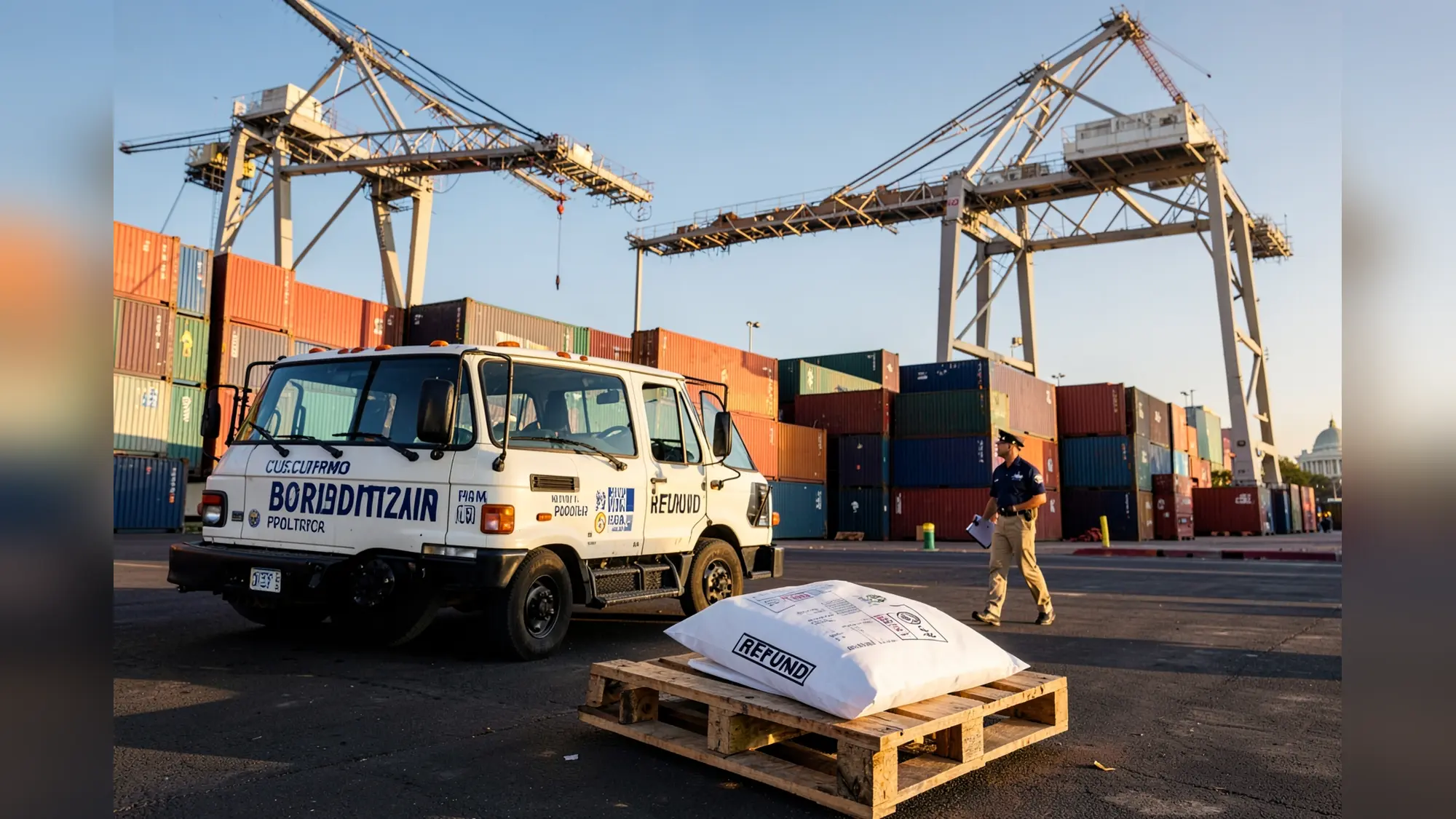
Roughly $100 billion has been returned to importers after the U.S. Supreme Court found large parts of the "Liberation Day" tariffs unlawful. U.S. Customs and Border Protection told the U.S. Court of International Trade that refunds, including interest, were processed through the end of July and forwarded to the Treasury for disbursement. The refunds went to the importers who paid the duties, not directly to households, and represent about 60 percent of roughly $166 billion collected under the tariff regime. The next legal steps will play out in filings and hearings in the U.S. Court of International Trade as states and private parties press challenges to the administration's follow-up tariffs.
Roughly $100 billion has been returned to importers, because the Supreme Court found the "Liberation Day" tariffs unlawful and that ruling triggered a mass refund effort. U.S. Customs and Border Protection told the U.S. Court of International Trade the agency completed refunds, including interest, through the end of July and certified the disbursements to the Treasury.
The refunds equal about 60 percent of the roughly $166 billion collected while the tariffs were in force. According to the agency's filing, nearly $29 billion in potential refunds remained under review at the time of the submission, and roughly $1.6 billion had not been paid because importers had not supplied banking details. The agency said the work was handled through its Consolidated Administration and Processing of Entries Refund component.
Who actually saw the money matters politically. The payments were made to importers, not to consumers.
Democratic Congressman Greg Casar criticised that outcome, saying, "Trump is sending the 'refunds' to the companies, not working people. Every single cent of these refunds should go back to American consumers."

The scale of the task has been large. Government briefings cited hundreds of thousands of importers and tens of millions of affected shipment entries during the period the tariffs were in force. Major corporations have already begun to report recoveries.
Amazon disclosed about $600 million in refunds in the second quarter and said some of the funds would be used to lower prices where specific charges had been applied.
The legal trigger for the refunds was the Supreme Court's February decision, which concluded that the International Emergency Economic Powers Act didn't authorise the president to impose broad import tariffs. After the ruling, the administration briefly introduced a temporary 10 percent global tariff under a different authority and then replaced it with new levies under Section 301 of the Trade Act of 1974.
That sequence produced fresh litigation. A coalition of state attorneys general and several states have challenged the new tariffs in the U.S. Court of International Trade and asked for additional relief. The court filing that disclosed the refund totals was made public in early August, but it didn't set a new administrative deadline for resolving the pending claims.
Significant sums remain unresolved, and the total disbursed could rise as the roughly $29 billion under review clears and importers supply banking information for the outstanding $1.6 billion. Expect further filings and hearings in the U.S. Court of International Trade as the dispute over the subsequent tariffs continues.
Related Articles
- Gordie Howe bridge to save 850,000 hours
- 49,000 Chinese EVs cleared for Canada, tariff set
- 10% tariff on canned vegetables shields Canadian processors
The next concrete milestones are filings and hearings in the U.S. Court of International Trade, where states and private parties are pressing challenges to the administration's follow-up tariffs. Originally reported by U.S. News.
This article was created with AI assistance.


