
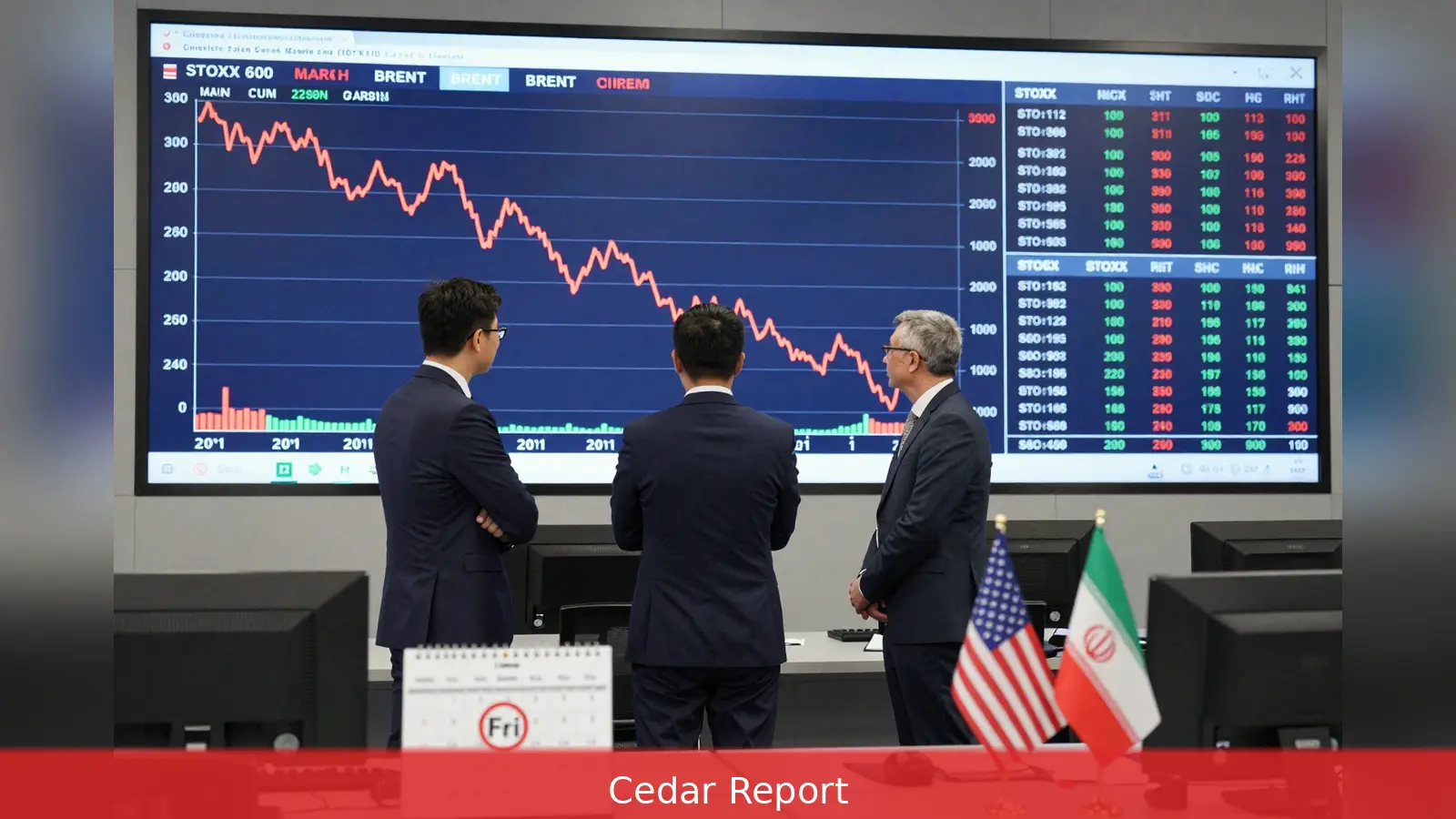
50%. That's roughly how much oil prices have fallen from their March highs, easing the immediate stagflation threat and prompting major strategists to reverse tactical underweights in European equities this week. The move shifts portfolios from defence toward selective risk taking, with banks urging fresh exposure to consumer discretionary pockets, notably luxury names, as regional earnings gaps narrow. A memorandum of understanding between the U.S. and Iran, cited as the political development that trimmed the stagflation risk, is due to be signed this Friday.
$96. That was roughly where Brent crude was trading on May 28, 2026 when Chicago Fed President Austan Goolsbee warned that energy inflation tied to the Iran war had created a "stagflationary shock" for Asian importers. Since March, oil has retraced about half of its peak move, and that correction is the catalyst European equity strategists pointed to this week when they closed tactical underweights, according to MarketWatch on June 17, 2026.
The practical effect is simple: households in energy importing countries face lower immediate fuel and transport bills, and corporate profit margins in sectors sensitive to energy and confidence should stop deteriorating. Barclays' European equity strategy team, led by Emmanuel Cau, explicitly tied the earlier downgrades to the energy shock and its hit to confidence, and recommended reverting to marketweight for consumer exposure. Barclays set an end of year target for the STOXX 600 of 670, roughly 5% above prevailing levels, reflecting a view that rate expectations have peaked and that disinflation will support European growth into the second half.
Deutsche Bank reached a similar tactical read. The team led by Maximilien Uleer, with Carolin Raab and Francesca Mazzali, closed their defensive underweight after booking about 5% of outperformance from their earlier positioning. Deutsche Bank expects European earnings growth to accelerate from 7% year on year in Q1 2026 to roughly 13% in Q2 2026, and it says that shift justifies a less defensive stance in regional equity exposure.
How strategists say investors should trade the change
Strategists converged on several tactical threads for portfolio implementation. First, close defensive underweights to European equities and reintroduce regional diversification where managers had been overweight US tech for earnings resilience. Barclays framed the March US-versus-EU trade as "a call on oil and Tech since March," arguing that a narrowing earnings gap weakens the case for a sustained Europe underweight.

Second, selectively add exposure to consumer discretionary, particularly luxury names that tend to benefit from stabilising confidence. That recommendation targets asset allocators who want to capture upside if consumers resume spending and if earnings revisions turn positive across the sector.
Third, tilt away from pure energy exposure now that the immediate peak shock has faded, while retaining vigilance on inflation persistence. Bank of America Global Research economist Aditya Bhave described the Federal Reserve as caught between stagflation and reflation risks, and BofA's rates strategists currently see the US 10 year around 4.25% over the coming years, with upside risks tied to reassessments of the neutral rate and long term inflation expectations.
In short, strategists say reduce tactical energy concentration but keep flexibility for a reappearance of inflationary pressures that would reprice rates.
Those sector and regional moves aren't mechanical. Households in energy importing countries, companies in input sensitive industries, and regional equity markets are the main groups that change when oil spikes fall back. Banks emphasise active, selective positioning rather than broad risk-on bets, favouring the consumer discretionary sleeve inside equities as the most direct lever to capture a confidence rebound.
Macro signals will still matter. Goolsbee cautioned that energy prices remain well above pre conflict levels and had been more persistent than markets initially expected. That's the key hedge to the optimistic tactical calls: a durable return of energy inflation would revive stagflation fears and force another round of defensive repositioning.
For portfolio managers, then, the trade is a calibrated rotation. Close defensive underweights to Europe, add selective consumer discretionary exposure, keep modest energy exposure rather than outright shorts, and preserve capacity to respond if inflation dynamics reverse. Where managers once viewed US tech as the safe earnings bet, the narrowing US Europe growth differential argues for a more balanced regional allocation.
Related Articles
- IBM stock jumps on quantum funding and AI momentum
- Six goals, one line: Staal's rebuke lands on Marner
- Musk forecasts $1T SpaceX revenue, far above Wall Street
The immediate test is Friday's U.S.-Iran memorandum signing, followed by the next inflation prints. If markets reverse after those events, strategists may need to re-establish defensive underweights.
This article was created with AI assistance.


