
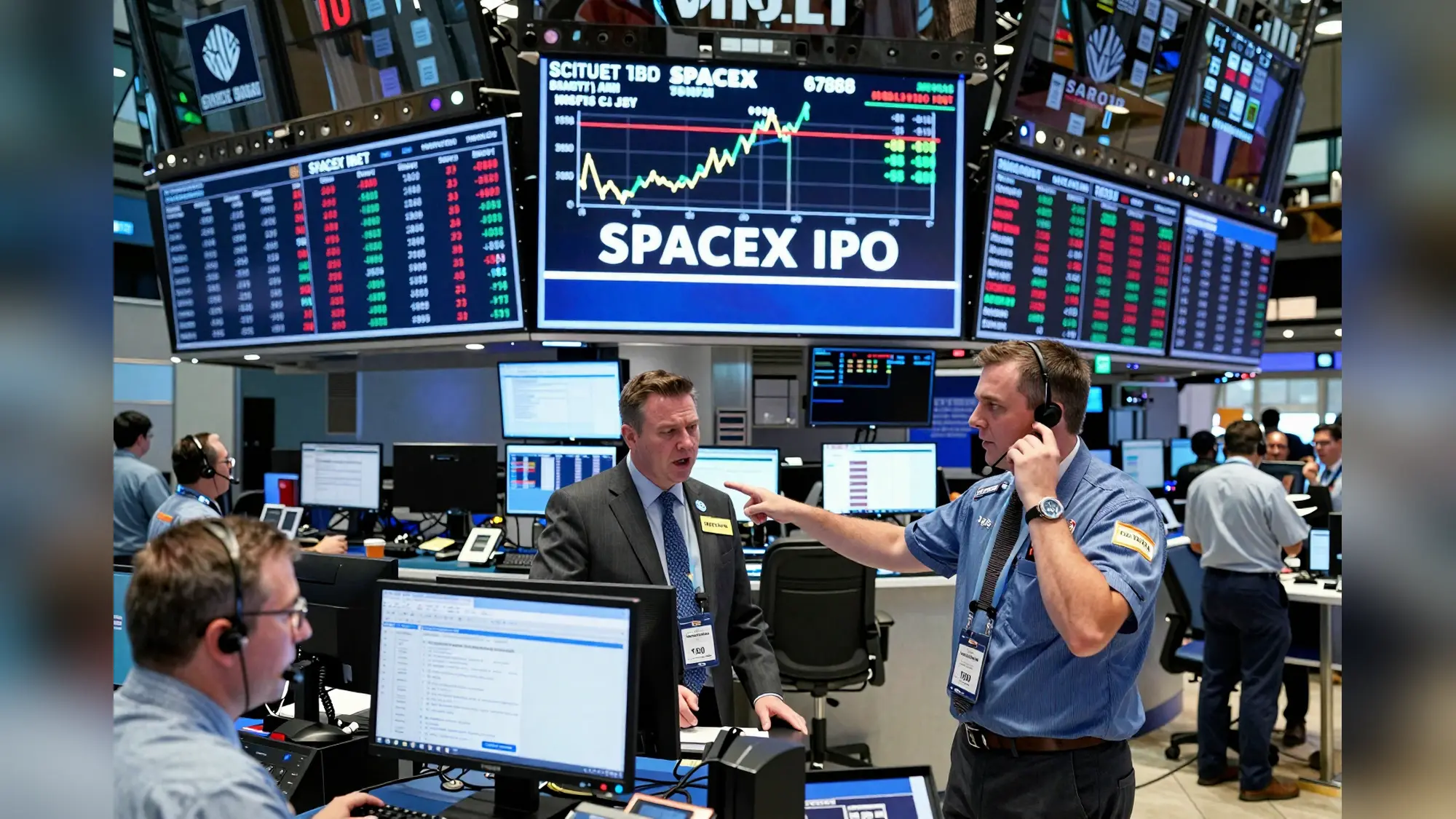
On the trading floor at midday, monitors flashed larger-than-usual volumes as traders and bankers prepared for a string of second-quarter results that analysts expect will show a clear jump in fee and trading revenue. KBW projects investment banking revenue for the largest U.S. banks to rise about 26 percent year-on-year in Q2, with trading revenue up roughly 14 percent, while Federal Reserve data cited by analysts shows loan growth accelerated in the quarter and is supporting stronger net interest income. The boost came from an unusually large SpaceX IPO that generated hundreds of millions of dollars in underwriting fees and from higher volatility tied to the Iran war, which widened bid-ask spreads and lifted sales and trading results.
Midday on trading floors, the sense was less that earnings season was routine and more that a concentrated set of events had already done much of the heavy lifting for bank profits. Deal teams and equity desks readied decks and guidance updates as the five biggest U.S. franchises prepared to report, and traders expected to hand supervisors some tidy numbers to explain.
What should investors expect when results land on July 14 and 15? Analysts expect a dual revenue beat: KBW projects about a 26 percent jump in investment banking fees and roughly 14 percent higher trading revenue across the largest U.S. banks for Q2. That pattern reflects both higher underwriting and advisory fees and a pickup in net interest income, the latter tied to the Federal Reserve data showing faster loan growth in the quarter.
Which banks open the season and when? JPMorgan Chase, Bank of America, Citigroup, Wells Fargo and Goldman Sachs are set to report on July 14, 2026, with Morgan Stanley scheduled to report on July 15, 2026.

What actually pushed fees and trading higher this quarter? The biggest single-line driver was an unusually large SpaceX IPO, which generated hundreds of millions of dollars in underwriting fees and boosted equity capital markets income industry wide. Geopolitical turmoil tied to the Iran war raised market volatility, widening bid-ask spreads and lifting sales and trading volumes across equities and fixed income.
Who pockets the gains inside the market? The largest U.S. franchises stand to benefit most. They led underwriting on the SpaceX deal and run sizable market-making operations that capture wider spreads. Corporate clients and institutional investors are the source of the fee income, while retail and corporate borrowers feeding faster loan growth help net interest income.
Veteran analyst Mike Mayo of Wells Fargo described the moment as a convergence of Wall Street and Main Street strength, where resilient consumer credit and renewed business lending underpin lenders' balance sheets.
How risky is this beat? Traders caution the pace may not hold. Some analysts note trading gains could retreat from the exceptionally high activity seen when the Iran conflict first shocked markets, and further geopolitical escalation could have two opposing effects: it would keep volatility and trading volumes elevated but could also hit economic confidence and complicate inflation and central bank policy, which in turn would affect lending dynamics.
Will investment banking momentum carry into next year? That's less certain. Industry data shows global investment banking activity expanded materially in the first half of 2026, but sustaining that pipeline into 2027 will depend on regulatory settings and whether the larger deal flow of this quarter is replicated.
Related Articles
- Charter stock jumps 12% as SpaceX tie-up poses frenemy risk
- Musk forecasts $1T SpaceX revenue, far above Wall Street
- SpaceX set to raise about $75 billion in IPO despite Starship setbacks
The immediate checkpoint is calendar based: JPMorgan Chase, Bank of America, Citigroup, Wells Fargo and Goldman Sachs report on July 14, 2026, then Morgan Stanley on July 15, 2026. Those results will show whether underwriting, trading and loan growth combined to produce a durable lift or simply delivered a one-quarter windfall. Originally reported by CNBC.
This article was created with AI assistance.


