
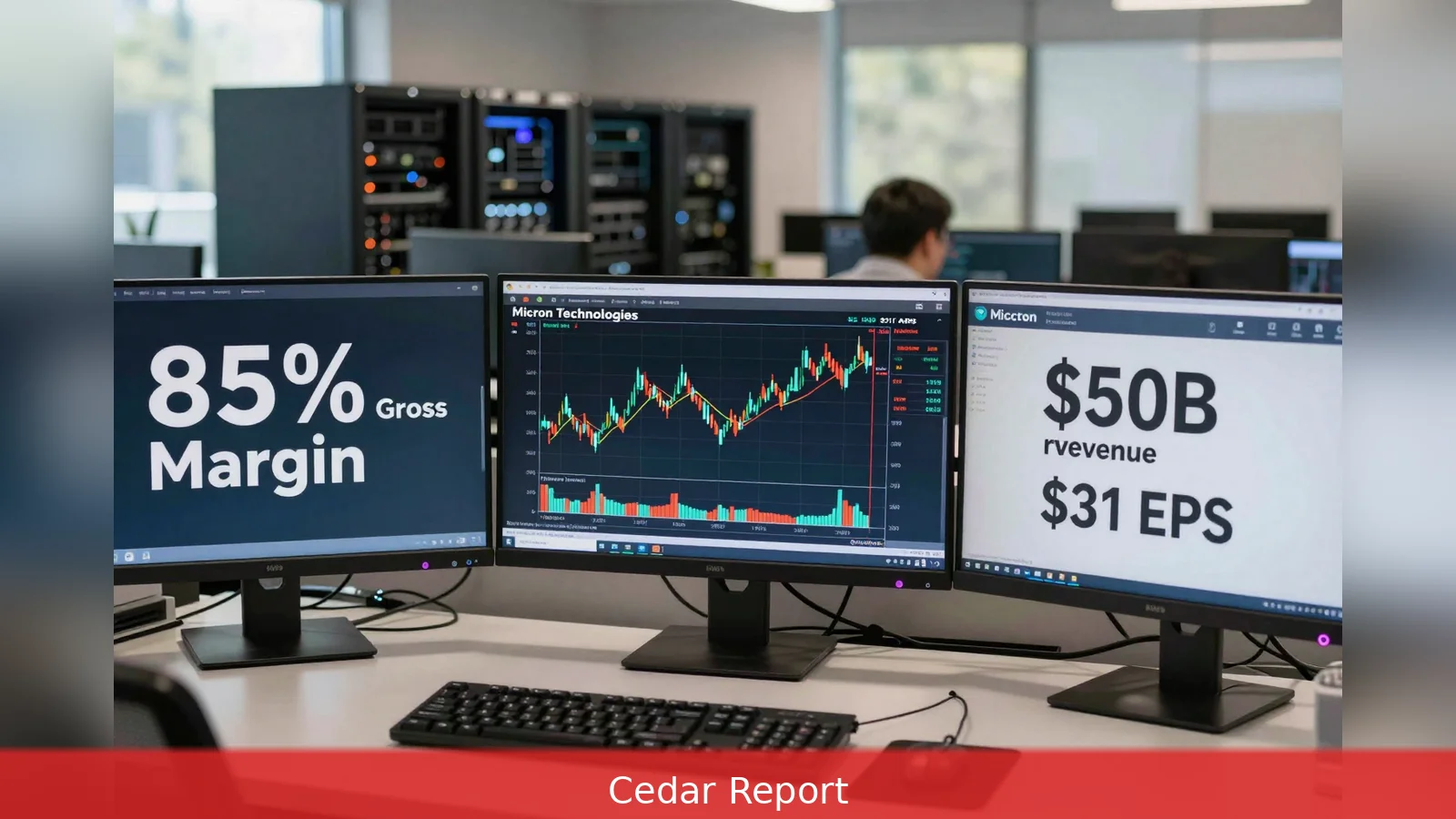
Device makers and cloud operators are paying more because Micron's gross margins have surged to about 85% amid a tight memory supply, a profit spike that has helped send the stock up roughly 325% this year. FactSet data reported by MarketWatch shows Micron now trades at a forward price-to-earnings multiple of 9.2x, only marginally above the 8.3x level at the end of 2025. Rolling 12-month earnings-per-share estimates have climbed about 284%, and in the most recent quarter Micron reported adjusted earnings per share that jumped roughly 1,200%, with adjusted gross margins near 85%, figures MarketWatch reproduced from the company reports. According to Yahoo Finance's coverage of Micron's earnings release, the company guided to about $50 billion in quarterly revenue and roughly $31 in adjusted earnings per share.
Investors remain cautious because a single-digit forward P/E implies the market is pricing in a reversal, even though current profits are unusually large. FactSet data reported by MarketWatch puts that forward multiple at 9.2x, a level that sits well below many software and hardware peers and close to valuations you see in legacy telecom names, MarketWatch and Morningstar summaries show.
Why the stock still looks cheap
The cheap multiple reflects the memory sector's boom-bust history and the risk that current margins won't stick. Micron posted an annual loss as recently as fiscal 2023, and MarketWatch noted the company once saw annual sales fall by about 49% when the memory market overcorrected. That past volatility keeps analysts and some investors sceptical even as the most recent results look extraordinary.
The present profit surge is real and measurable. Rolling 12-month EPS estimates are up about 284% and the shares have rallied roughly 325% year to date, FactSet polling cited by MarketWatch shows. In the last reported quarter Micron's adjusted EPS climbed about 1,200% and adjusted gross margins approached 85%, data MarketWatch reproduced from the earnings release shows. Those numbers reflect an acute supply squeeze for DRAM and NAND memory that has pushed customers to pay up for capacity.
The squeeze shows up in different ways across Micron's customer base. Yahoo Finance's coverage highlighted that some device makers have passed higher component costs to customers through higher retail prices on certain products.

For cloud providers and other hyperscalers, the effect is higher infrastructure spending to absorb the cost of AI-driven capacity, a fact MarketWatch's reporting also emphasised.
What could lift the multiple
Analysts cited in the coverage point to longer-term customer agreements as the clearest route to a higher valuation. Contracts that give Micron steadier, multi-year revenue visibility would reduce concerns about cyclical swings and could justify a move out of the single-digit multiple band that now contains the stock, the reports say.
Even if such agreements emerge, the ultimate test for keeping margins high is whether customers can absorb the cost of AI-grade memory without bleeding profits or pushing large price increases on end users. The coverage makes plain that sustaining margins depends on several outcomes that aren't mutually exclusive: device makers could pass higher component costs to consumers, software firms could generate renewed subscription revenue tied to higher-capacity devices, advertising could monetise expanded consumption, or the extra hardware could produce measurable productivity gains for cloud customers that justify the spending.
Valuation comparisons in the reporting add perspective. MarketWatch and Morningstar summaries using FactSet polling show Micron's forward P/E sits well below major software and hardware peers.
South Korean and Japanese memory rivals are quoted at single-digit forward multiples in those summaries, while storage-focused names trade at much higher multiples because those businesses are viewed as less commoditised.
Micron's own guidance frames the debate. According to Yahoo Finance's account of the earnings release, management forecast roughly $50 billion in revenue and about $31 in adjusted EPS for the fiscal fourth quarter and suggested gross margins might rise toward 86% the following quarter. Those are the clearest, most recent datapoints the market has to weigh against the memory cycle's history.
Investors who remain cautious point to the company's recent past and the memory market's volatility. Supporters highlight the extraordinary margins and earnings momentum. Both positions are grounded in the same facts: a tight supply-demand balance that has produced near-85% gross margins today, and a long track record of sharp corrections that could erase much of the current upside.
Related Articles
- AI capex could hit $1.1T by 2027, Goldman warns
- Most seniors get free retirement-seminar pitches: are annuities really better?
- Age 55, $100k: $2,900 now or $2,200 with 3% hikes?
Watch Micron's fiscal fourth-quarter figures and the next-quarter margin guidance, where the company has said gross margins could reach about 86%. Originally reported by marketwatch.com.
This article was created with AI assistance.


