
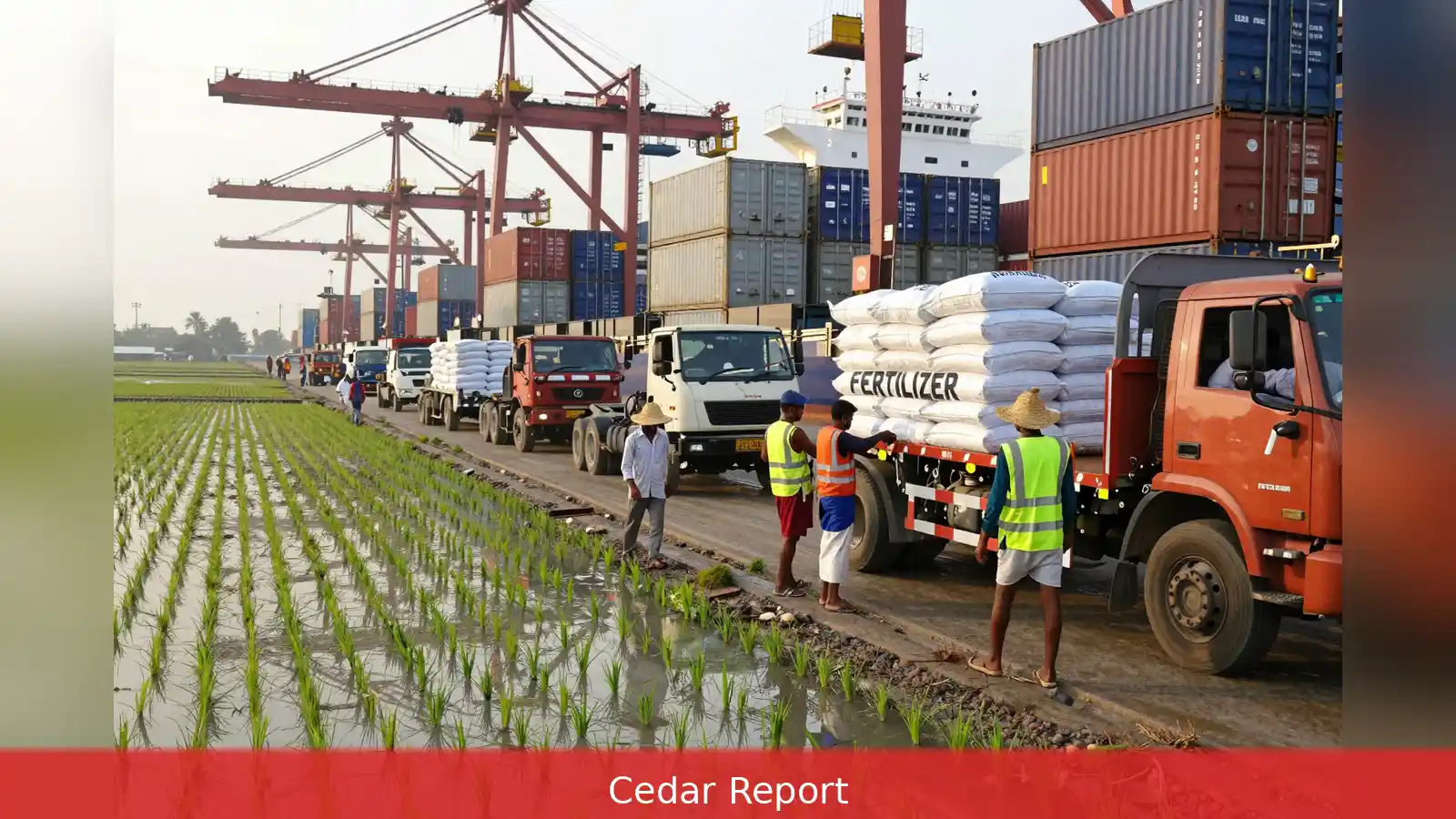
1.1 billion: the World Bank approved emergency financing to head off a fertiliser shortfall that could threaten roughly 90 percent of Bangladesh's rice output. On June 27, 2026 the bank signed off on two linked projects, a $300 million import facility to buy 600,000 metric tonnes of fertiliser ahead of the Aman and Boro seasons, and a $713 million contingent emergency fund for rapid relief. The bank said the contingent funds can be mobilised immediately, with disbursement due to begin by June 30, 2026.
300 million. That's the first tranche the World Bank has set aside under an Emergency Support for Food Security Project to finance imports of 600,000 metric tons of critical fertiliser ahead of the main rice seasons.
The World Bank emphasised the timing. The planned imports are meant to secure fertiliser availability for the Aman and Boro seasons, running July 2026 through April 2027, which together account for roughly 90 percent of Bangladesh's rice output. The bank said the time-bound financing targets immediate availability so planting and yields aren't disrupted.
The bank noted Bangladesh's import exposure: the country sources more than 85 percent of its fertiliser requirements from abroad, a dependence that leaves domestic production vulnerable to global supply shocks.
Contingency funding to stabilise incomes and services
713 million. The second, larger piece of the package is a Contingent Emergency Response Project totalling $713 million for rapid emergency spending. The World Bank said those contingent funds can be used for cash transfers and livelihood support to stabilise incomes and preserve jobs among affected households and micro, small and medium enterprises facing income shocks from rising input and energy costs.

Jean Pesme, the World Bank's division director for Bangladesh and Bhutan, framed the package as a rapid response to external shocks that threaten food security and fiscal stability. He said the surge in prices stemming from the Middle East conflict, combined with tighter fiscal space, has hit small farmers and low-income households hardest.
The bank made clear the two aims of the financing: first, to protect smallholder farmers and poor and vulnerable households by ensuring inputs and incomes are available for the critical planting and harvesting cycles; second, to shield micro, small and medium enterprises from income losses as energy and input costs climb. Those two groups, the World Bank said, are the principal channels through which food and fuel shocks translate into broader social and economic hardship.
Beyond the immediate agricultural focus, the World Bank said the contingent funds are designed to preserve critical public services and jobs by allowing the government to make quick, targeted expenditures. The bank framed the package as a tool to buy time for policymakers, helping the government respond quickly to economic shocks while avoiding deeper fiscal dislocations.
Reuters reported that Bangladesh is also seeking additional external financing from development partners, including the International Monetary Fund, to shore up foreign exchange reserves and ease pressure on public finances after a surge in energy import costs and broader economic challenges. The World Bank said the $1.1 billion will help the government respond quickly to the shocks while protecting jobs, livelihoods and critical public services.
The approvals were announced on June 27, 2026, and the World Bank said the contingent emergency funds are set to be disbursed by June 30, 2026, allowing very rapid support to households, farmers and essential service providers if conditions deteriorate.
For a country that depends heavily on rice as both a staple and a source of rural income, ensuring fertiliser supply through the Aman and Boro cycles is a narrow but vital policy lever. The bank singled out smallholder farmers and low-income households as those most exposed to the recent spike in global prices, and structured the financing to move money quickly into production and welfare channels.
The package also signals how multilateral lenders can combine straightforward commodity imports with flexible contingency funding to respond to compound shocks. The World Bank said the combination was designed to limit disruption to planting schedules, stabilise incomes, and keep basic services running while the government seeks broader financing support from partners.
Related Articles
- Micron still trades cheap after 325% rally
- Shannen Doherty's Malibu home sells for $7.65 million after price cuts
- DOJ memo widens False Claims Act risk for health providers
Disbursement is set for June 30, 2026. The next signpost will be whether the funds are deployed as planned and whether Bangladesh secures follow-up financing from the IMF and other partners.
This article was created with AI assistance.


