
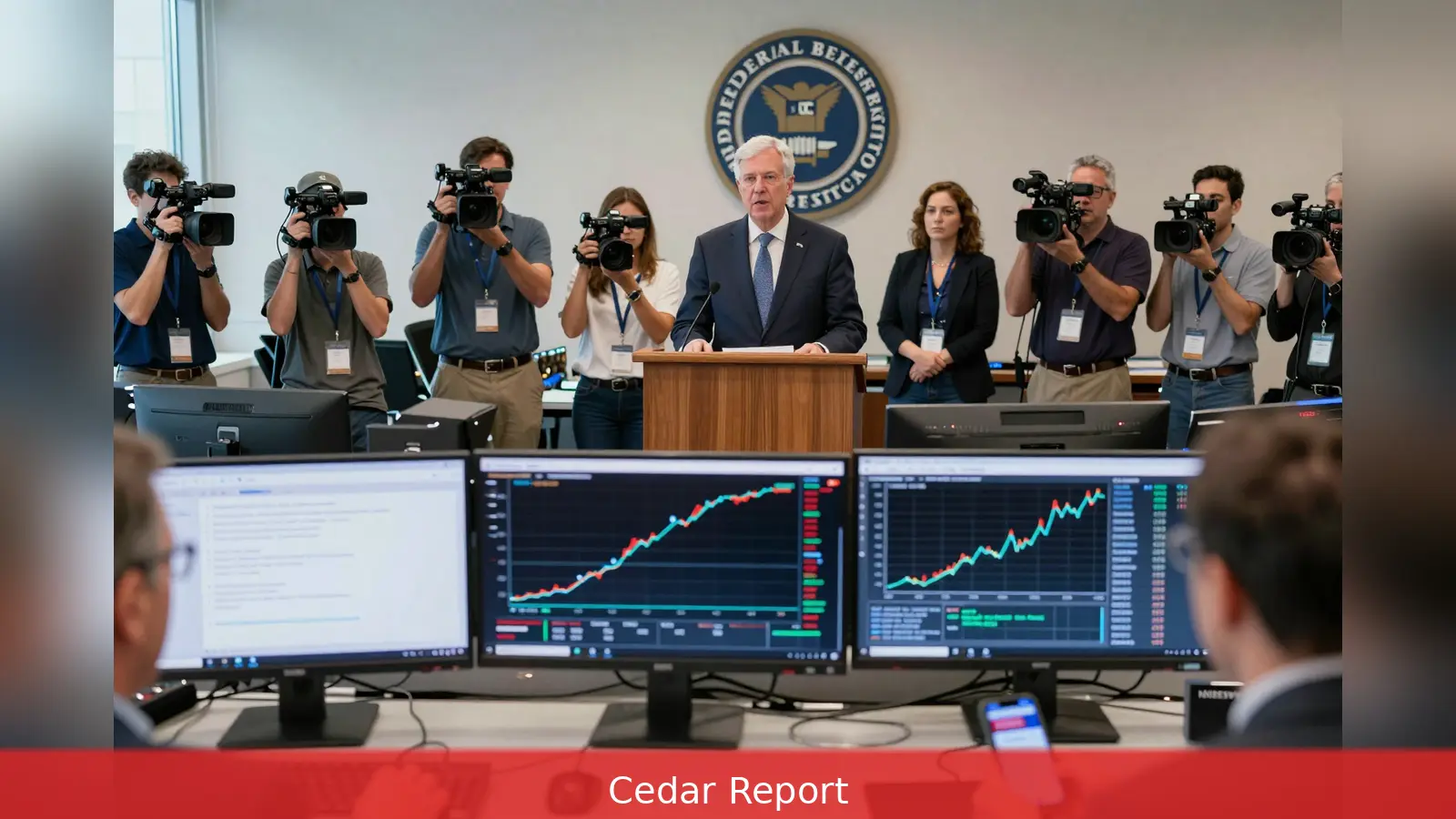
The afternoon of June 17 at the Federal Reserve press room felt deliberate and restrained as Kevin Warsh signalled he plans to give markets a louder say in policy talk. Market pricing has shifted toward a higher-for-longer stance for interest rates, reversing earlier expectations of cuts this year. Morgan Stanley warned that following market pricing into policy could prompt policymakers to regret ceding the leash to traders, a view summed up by strategist Matthew Hornbach, who wrote, "we think the market will eventually view this as a policy mistake." Swaps pricing and central-bank commentary are the near-term signposts investors will watch to see if those odds stick.
Press-room cameras clicked as Warsh laid out a different public posture, one that favours letting market prices carry more of the forward guidance burden. The setting was careful, the tone restrained, but the implication was clear: official projections and public nudges may recede while market signals rise in importance.
Swaps markets responded quickly, pushing probability toward a higher terminal path after the June policy window. Traders have moved from pricing cuts earlier in the year to a higher-for-longer view, shifting the policy calculus embedded in traded instruments. The Federal Open Market Committee has paused on rate changes in recent meetings, and that baseline now looks more exposed to short-term market sentiment.
The parties most immediately exposed are retail borrowers, mortgage applicants, corporate treasuries and currency traders. Even a modest move in short-term policy alters mortgage-rate calculations and corporate borrowing costs in ways that feed through to household budgets and financing plans. Morgan Stanley’s fixed-income strategists, led by Matthew Hornbach, argued that if the Fed were to follow market pricing and deliver a hike this year, "we think the market will eventually view this as a policy mistake," framing the risk that a market-driven move could unsettle longer-term credibility rather than calm markets.
Behind the market moves sits a parallel shift in communications strategy. Morgan Stanley’s economists and strategists expect a leaner, quieter Fed under Warsh, with less forward guidance and fewer hints about the policy path. The notes to clients say they would not be surprised if Warsh declines to answer certain forward-looking questions at future briefings and that he may scale back the Summary of Economic Projections, the so-called dot plot. That approach mirrors Warsh’s prior public critiques of forward guidance and of the Fed’s expanded balance sheet.

Currencies feel the near-term spillover. A Morgan Stanley currency-strategy team flagged the June FOMC as a standout risk that could jolt carry trades and create fresh dollar trends. The team pointed out that implied volatility for key currency pairs had fallen to unusually low levels, leaving positions vulnerable to a hawkish surprise in the Fed’s statement or in updated policy projections.
Those unusually low volatility readings leave positions vulnerable to a hawkish surprise, and the bank’s team argued the dollar could move more than markets are currently pricing, on either an aggressive or cautious surprise.
Morgan Stanley ties its caution to evolving inflation signals inside the Fed. Some officials, Warsh among them, have shown interest in alternative core inflation gauges. Analysts cited a trimmed-mean PCE measure from a Federal Reserve district that placed underlying inflation closer to the Fed’s 2.0 percent objective than many headline measures. That reading feeds a debate about which gauges should carry the most weight in policy deliberations, and it underpins Morgan Stanley’s broader view that a Warsh-led Fed could tilt toward restoring institutional credibility even if that means rejecting market expectations.
Those two threads, market pricing and communication change, create a policy tension. On one hand, allowing markets to set expectations can sharpen incentives for quick adjustment if inflation surprises to the upside. On the other hand, Morgan Stanley warns that ceding too much to market pricing risks giving traders excessive influence over the timing and size of moves. If the Fed later judges a market-driven hike to have been premature, that could damage the central bank’s credibility.
Market positioning has already shifted. Earlier in the year traders were discounting cuts; after recent shocks and ahead of the June meeting, swap pricing moved toward a higher-for-longer stance. The June FOMC and Warsh’s early public remarks have reset some odds and shifted the policy calculus embedded in traded instruments.
For investors and policy watchers the clear near-term indicators are swaps pricing and the next rounds of central-bank commentary. Those are the signals Morgan Stanley and others are watching to judge whether markets have overstepped or whether the Fed will accept market-driven guidance as its new shorthand.
Related Articles
- 3.5%-3.75% and Warsh: Fed clash or truce
- Musk forecasts $1T SpaceX revenue, far above Wall Street
- 50% drop in oil eases stagflation, strategists pivot
The clearest immediate test is swaps pricing for a year-end move and whether the Fed alters its projections at the next FOMC windows.
This article was created with AI assistance.


