
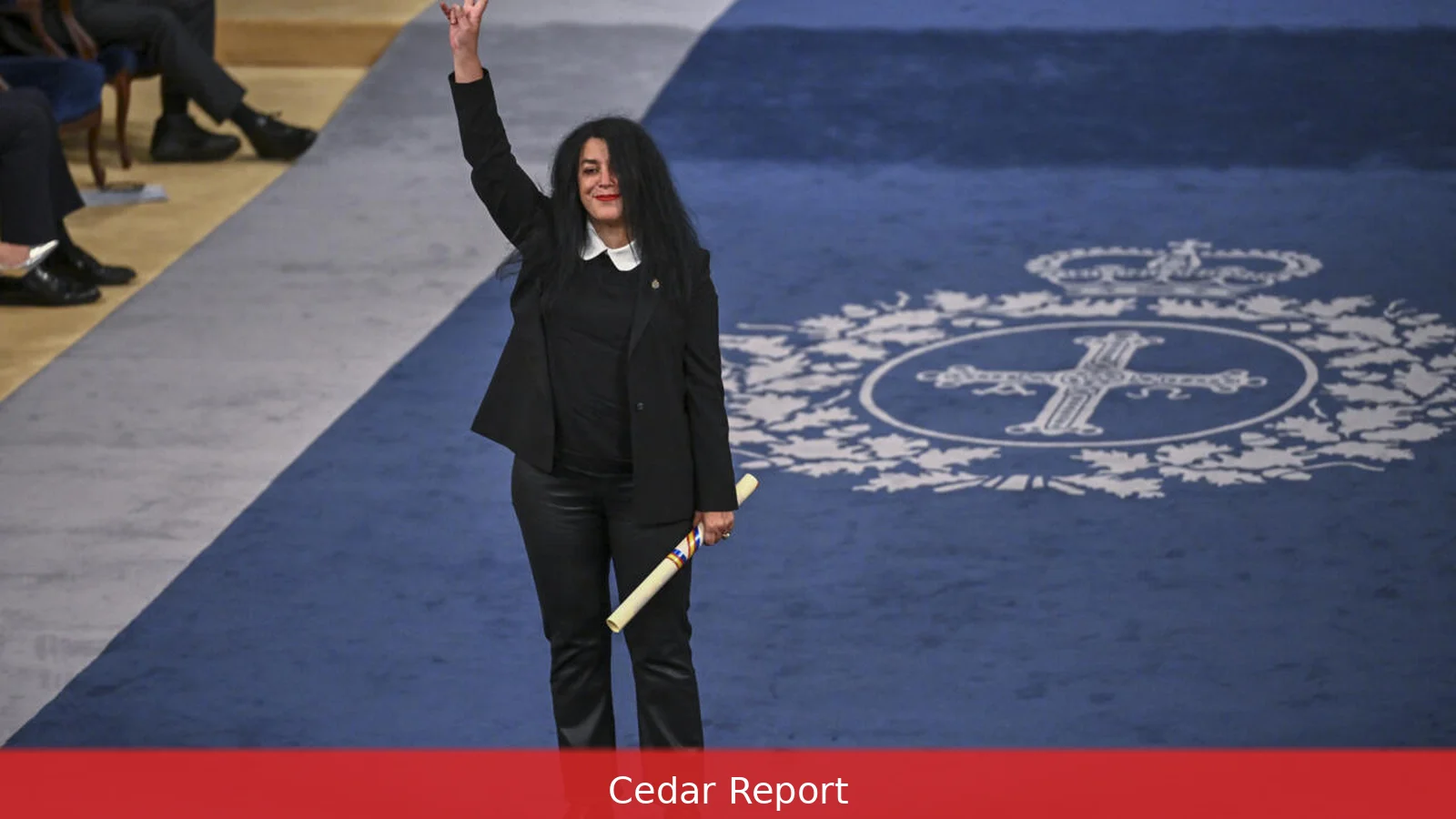
56. That was Marjane Satrapi's age when her family announced to AFP that she had died in Paris on June 4, 2026, saying she "died of sadness" a little over a year after the death of her husband Mattias Ripa on April 8, 2025. Satrapi was a Franco-Iranian author and filmmaker whose black-and-white graphic memoir Persepolis made her an international voice for Iranians in exile and for women challenging social strictures. Her work moved from acclaimed comics to prize-winning films, including the 2007 animated Persepolis adaptation that won the Jury Prize at Cannes and later received an Academy Award nomination. Tributes from peers in cinema and the arts followed the announcement, and her family didn't specify funeral arrangements.
56. That single figure frames a life spent between Tehran and Paris, and a public career built on memory, exile and visual economy. Born in Rasht, Iran, Satrapi left Iran in the early 1990s, trained at the École supérieure des arts décoratifs in Strasbourg and spent her adult life in France, becoming a naturalised French citizen in 2006.
From Persepolis to the Cannes podium
Satrapi rose to international prominence with Persepolis, a stark autobiographical graphic series that chronicled her childhood and adolescence in Tehran under the Islamic Republic and her later exile. The first volume of Persepolis won a prize at the Angoulême comics festival in 2001. She co-directed the 2007 animated adaptation with Vincent Paronnaud; the film won the Jury Prize at the Cannes Film Festival in 2007 and went on to earn a nomination for Best Animated Feature at the 2008 Academy Awards. Those honours established her as a cross-genre artist who could move stories from page to screen without softening their political edge.
She didn't stay within one medium. Her 2003 album Broderies presented short vignettes of Iranian women, and Poulet aux prunes, published in 2005, won the Angoulême prize for best album and was later adapted for film, which Satrapi co-directed in 2011 with a cast that included Mathieu Amalric. Her later filmography ranged from European features to a Hollywood production, the Marie Curie biopic Radioactive in 2019, and the ensemble dark comedy Dear Paris in 2024. In 2024 she also created a large triptych tapestry for the Paris Olympic Games, a public work that extended her visual practice into civic space.

Voice of dissent and public grief
Satrapi was an outspoken critic of the Iranian government and a vocal supporter of Iranian women and dissidents. Her public interventions in recent years kept attention on Iran's human rights situation. In January 2025 she declined the French Légion d'honneur, saying she couldn't accept an honour while, in her view, France misread its policy toward Iran and refused visas to young Iranian activists and artists.
Her Instagram posts in 2025 recorded her grief after Ripa's death. In one post she wrote, "I Lost the love of my life," a line that her family echoed when they told AFP that Satrapi "died of sadness" a little more than a year later.
The family transmitted the announcement to AFP on June 4, 2026; they didn't provide details about funeral or memorial arrangements.
Reaction from the film and arts community was immediate. Thierry Frémaux, delegate general of the Cannes Film Festival, said Satrapi was "an extraordinary artist and an endearing woman who embodied the joy of creation and the sadness of exile and painful memories. We mourn her this morning," remarks transmitted to AFP. Illustrator and author Pénélope Bagieu described Satrapi as "decisive" and wrote that she had "opened a door, a possible" for many women artists.
Those responses underline how Satrapi's work combined private memory with public politics. Persepolis remains the title most readers name when recalling her influence, but critics and colleagues point to a wider practice: short comics and albums, films she directed, adaptations she shepherded, and public artworks that took her themes into different registers. Her trajectory was one of translation, in the literal sense of moving between languages and countries, and in the artistic sense of converging media and genres.
Related Articles
- Trump tightens Iran deal; Tehran has three days to reply
- U.S. 440 kg demand could end Iran's nuclear file
- Four drones shot down as Iran says it struck a US base
Her family did not provide details about funeral or memorial arrangements.
Originally reported by lapresse.ca.
This article was created with AI assistance.


